
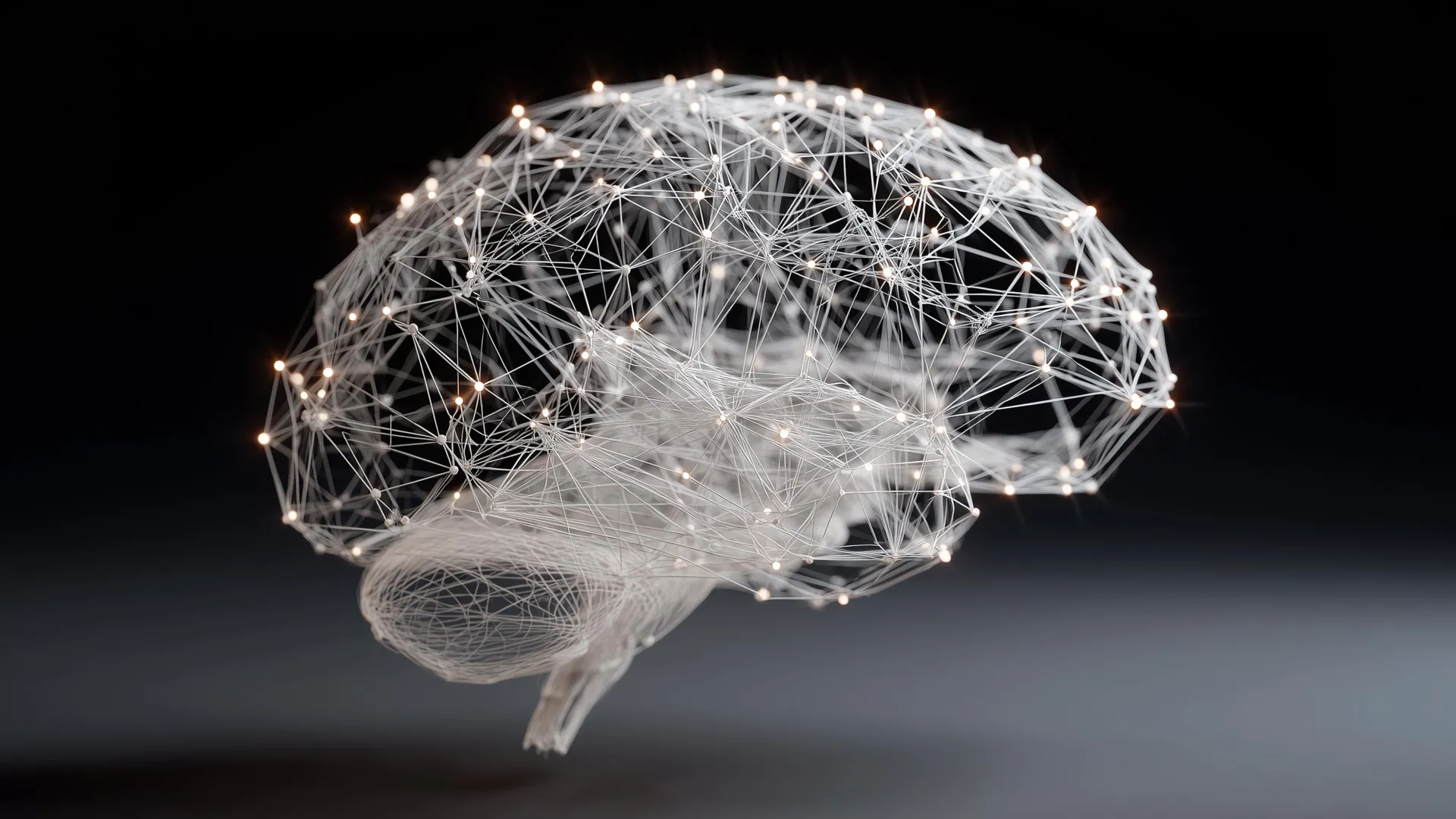
Contemporary neuroscience has largely pursued a specialized approach to understanding the human brain, dissecting its complex operations into distinct functional modules responsible for tasks like attention, memory, language, and abstract reasoning. While this reductionist methodology has yielded significant advancements in mapping specific cognitive processes to localized neural circuits, it has left a fundamental question unanswered: how do these seemingly disparate systems coalesce to produce a singular, cohesive conscious experience and the remarkable capacity we call intelligence? Researchers at the University of Notre Dame have embarked on an ambitious project to unravel this enigma, employing sophisticated neuroimaging techniques to probe the brain’s overarching organizational principles and their direct contribution to intellectual prowess.
Aron Barbey, the Andrew J. McKenna Family Professor of Psychology at Notre Dame, articulates the core challenge: "Neuroscience has excelled at detailing the roles of particular neural networks, but has been far less successful in explaining how a single, coherent mind arises from their intricate interplay." This limitation becomes particularly apparent when considering the well-established observation in psychology that various cognitive abilities are not isolated but tend to covet a common underlying strength. Individuals who demonstrate proficiency in one cognitive domain, such as rapid information processing or sophisticated problem-solving, often exhibit comparable adeptness in others. This phenomenon, historically termed "general intelligence" or "fluid intelligence," profoundly influences an individual’s capacity for learning, adapting to new circumstances, and navigating the complexities of academic, professional, social, and health-related challenges.
For over a century, this pervasive interconnectedness of cognitive skills has hinted at a deeply unified foundation for human thought. However, the precise neural mechanisms underpinning this unity have remained elusive, a persistent puzzle for cognitive scientists. Professor Barbey emphasizes that the pursuit of understanding intelligence should transcend the simplistic question of "where" it resides within the brain. "The problem of intelligence is not one of functional localization," he states, directing the Notre Dame Human Neuroimaging Center and the Decision Neuroscience Laboratory. While much research has focused on identifying specific regions within the frontal and parietal cortex as the locus of general intelligence, Barbey argues for a more profound inquiry: "The more fundamental question is how intelligence emerges from the principles that govern global brain function – how distributed networks communicate and collectively process information."
To investigate this holistic perspective, Professor Barbey, alongside lead author and Notre Dame graduate student Ramsey Wilcox, put to the test a theoretical framework known as the Network Neuroscience Theory. Their groundbreaking findings, published in the esteemed journal Nature Communications, offer compelling evidence for this novel paradigm.
The Network Neuroscience Theory posits that general intelligence is not an intrinsic mental faculty or a specific strategy employed by the brain. Instead, it is conceptualized as an emergent property reflecting the degree to which various cognitive skills are positively correlated. This correlation, according to the theory, arises directly from the efficiency with which the brain’s interconnected networks are structured and the seamlessness with which they collaborate. To empirically validate this hypothesis, the research team meticulously analyzed extensive datasets comprising brain imaging and cognitive performance metrics from a cohort of 831 adults participating in the Human Connectome Project. Furthermore, they integrated findings from an independent validation group of 145 adults involved in the INSIGHT Study, a project supported by the Intelligence Advanced Research Projects Activity’s SHARP program. By synthesizing measures of both brain structure and functional connectivity, the researchers were able to construct a granular and comprehensive depiction of the brain’s large-scale organizational architecture.
Crucially, this theoretical framework shifts the paradigm away from attributing intelligence to a single brain region or a discrete set of functions. Instead, the Network Neuroscience Theory proposes that intelligence is a characteristic of the brain operating as an integrated system, contingent upon its capacity for efficient coordination and dynamic reorganization in response to diverse cognitive demands. Barbey and Wilcox characterize this reorientation as a fundamental paradigm shift.
"We discovered evidence for system-wide coordination within the brain that is both robust and adaptable," Ramsey Wilcox explains. "This coordination does not directly execute cognitive tasks but rather dictates the spectrum of cognitive operations that the entire system can effectively support." He further elaborates, "Within this theoretical construct, the brain is conceptualized as a network whose behavior is governed by global attributes such as efficiency, flexibility, and integration. These attributes are not confined to individual tasks or specific brain networks; rather, they are defining characteristics of the system as a whole, influencing every cognitive operation without being reducible to any single one of them." Wilcox highlights the methodological implication of this shift: "Once the research question evolves from ‘where’ intelligence resides to ‘how’ the system is organized, the empirical targets of investigation naturally change."
The empirical findings strongly corroborated four principal predictions derived from the Network Neuroscience Theory. Firstly, intelligence is not localized to a solitary neural network; rather, it emerges from a complex interplay of distributed processing across numerous interconnected networks. This implies that the brain must adeptly partition tasks among its specialized systems and then seamlessly integrate their outputs to achieve a unified outcome.
Secondly, the research underscored the critical role of robust integration and efficient long-distance communication in facilitating successful cognitive coordination. Professor Barbey describes this as "a vast and intricate network of connections that function as high-speed ‘shortcuts,’ linking geographically distant brain regions and thereby enabling the integration of information across diverse networks." These critical neural pathways facilitate rapid and effective information exchange between disparate brain areas, a prerequisite for unified cognitive processing.
Thirdly, the study revealed that effective integration is contingent upon the presence of regulatory regions that actively orchestrate the flow of neural information. These pivotal "hub" regions play a crucial role in coordinating activity across multiple networks, ensuring that the appropriate neural systems are recruited and engaged for specific cognitive tasks. Whether an individual is deciphering subtle social cues, acquiring a novel skill, or making a decision between a deliberate analytical approach and an intuitive leap, these regulatory areas are instrumental in managing the entire cognitive process.
Finally, the research demonstrated that general intelligence is intrinsically linked to the brain’s ability to strike a delicate balance between local specialization and global integration. Optimal cognitive performance, according to this model, is achieved when highly interconnected local clusters operate with maximal efficiency while simultaneously maintaining efficient communication pathways to distant brain regions. This dynamic equilibrium is fundamental to fostering flexible and effective problem-solving capabilities.
Across both the Human Connectome Project and the INSIGHT Study cohorts, variations in general intelligence were consistently and significantly correlated with these macro-level organizational features of the brain. Notably, no single brain area or any conventionally defined "intelligence network" could account for the observed patterns of cognitive performance. "General intelligence becomes apparent when cognitive processes are synchronized and coordinated," Professor Barbey observes, "particularly when numerous distinct processes must collaborate harmoniously under the constraints of the overall system."
The implications of this research extend far beyond the confines of understanding human cognition. By illuminating the importance of large-scale brain organization, these findings offer profound insights into the fundamental reasons why the human mind functions as a unified and coherent entity in the first place. This novel perspective may also shed light on phenomena such as the developmental trajectory of intelligence, its gradual decline with aging, and its particular vulnerability to widespread brain injury. In each of these scenarios, it is the large-scale coordination and integration of neural systems, rather than isolated functional impairments, that appear to be most significantly affected.
Furthermore, these discoveries contribute meaningfully to the ongoing discourse surrounding artificial intelligence. If human intelligence is fundamentally dependent on the intricate system-level organization of the brain, rather than a singular, universal processing mechanism, then the creation of artificial general intelligence may necessitate an approach that transcends the mere scaling of specialized computational tools. "This research can propel us toward considering how to leverage the design characteristics of the human brain to foster advancements in human-centered, biologically inspired artificial intelligence," Professor Barbey suggests. He elaborates on the current limitations of AI: "Many artificial intelligence systems can excel at specific tasks, but they still struggle to generalize their knowledge and apply it effectively across diverse situations. Human intelligence is defined by this remarkable flexibility, and it is a direct reflection of the unique organizational principles inherent in the human brain." The research was conducted with the valuable contributions of co-authors Babak Hemmatian and Lav Varshney from Stony Brook University.
About the Author












