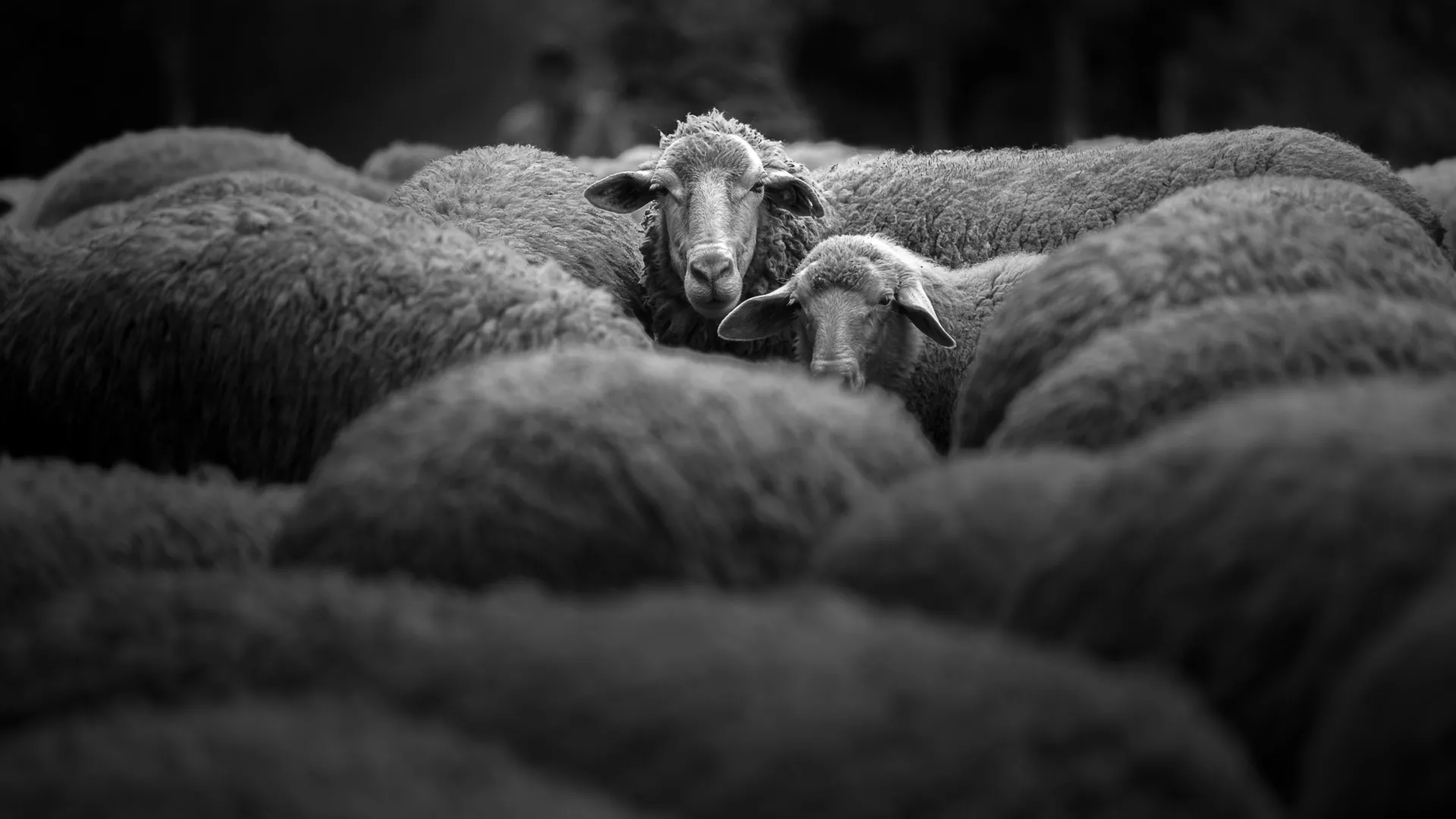
A groundbreaking discovery in the field of ancient DNA analysis has provided crucial insights into the transmission of Yersinia pestis, the bacterium responsible for plague, during the Bronze Age, a period predating the infamous Black Death by millennia. For years, scientists have grappled with the perplexing question of how an early variant of this pathogen, prevalent across Eurasia for nearly two thousand years around 5,000 years ago, managed to traverse vast geographical distances without the assistance of fleas, a primary vector in later plague outbreaks. The key to unlocking this ancient mystery has now emerged from the genetic signature preserved within the skeletal remains of a domesticated sheep, dating back approximately 4,000 years.
This pivotal find, published in the prestigious journal Cell under the title "Bronze Age Yersinia pestis genome from sheep sheds light on hosts and evolution of a prehistoric plague lineage," represents the first definitive evidence of Bronze Age Y. pestis infection in a non-human host. The international research consortium, featuring contributions from leading institutions in Germany, Russia, South Korea, and Harvard University, along with University of Arkansas archaeologist Taylor Hermes, identified the presence of the ancient bacterium’s DNA within a sheep bone excavated from Arkaim. Arkaim, a fortified Bronze Age settlement situated in the Southern Ural Mountains of modern-day Russia, near the border with Kazakhstan, has become a focal point for this significant revelation. The implications of this discovery are profound, strongly suggesting that livestock, such as sheep, may have played a vital role in the dissemination of plague during this early period, thereby offering a compelling explanation for the pathogen’s extensive spread across the Eurasian continent.
The research led by Taylor Hermes, who co-directs a substantial project focused on deciphering ancient livestock DNA, aims to meticulously trace the migratory patterns of domesticated animals like cattle, goats, and sheep from their origins in the Fertile Crescent throughout Eurasia. These movements were instrumental in shaping the development of nomadic cultures and the establishment of early empires, a complex tapestry of human and animal interaction that researchers are now able to examine at a molecular level. By analyzing genetic material painstakingly preserved in ancient bones and teeth, the team seeks to reconstruct these historical journeys and understand their broader societal and biological consequences.
Working with ancient DNA presents a formidable array of challenges, transforming what might seem like a straightforward scientific endeavor into a painstaking process of meticulous extraction and purification. Archaeologist Taylor Hermes candidly describes the genetic landscape of ancient samples as a "complex genetic soup of contamination." This inherent complexity, arising from a multitude of sources, poses a significant hurdle in isolating the specific genetic signal of the animal being studied. However, this very contamination also presents a unique opportunity, allowing researchers to probe for pathogens that may have infected not only the herds but also the human handlers who interacted with them on a daily basis.
The painstaking nature of ancient DNA research is underscored by the minuscule size of the genetic fragments recovered. Many of these fragments measure a mere 50 base pairs, a stark contrast to the more than 3 billion base pairs that constitute the complete human genome. Furthermore, animal remains often exhibit poorer preservation compared to human remains. While human burials were typically conducted with care, ensuring a degree of protection for the deceased, animal bones were frequently subjected to the rigmas of butchery, cooking, and disposal in refuse heaps. These processes, combined with prolonged exposure to environmental factors like heat and weather, gradually degrade the delicate genetic material, making its retrieval and analysis an arduous undertaking.
The breakthrough moment occurred during an in-depth examination of livestock remains unearthed from Arkaim during excavations conducted in the 1980s and 1990s. While meticulously analyzing the genetic material, Hermes and his collaborators stumbled upon an unexpected anomaly: DNA belonging to Yersinia pestis was detected within a sheep bone. This discovery sent ripples of excitement through the research team. "It was alarm bells for my team," Hermes recounted, emphasizing the unprecedented nature of isolating the Y. pestis genome from a non-human sample for the first time. The significance was amplified by Arkaim’s association with the Sintashta culture, a civilization renowned for its early advancements in horsemanship, sophisticated bronze weaponry, and substantial gene flow into Central Asia, suggesting a nexus of interconnected developments during the Bronze Age.
The existence of identical Bronze Age plague strains found in human remains situated thousands of kilometers apart has long presented a perplexing puzzle. The central question has revolved around the mechanisms by which the disease achieved such extensive geographical reach. "It had to be more than people moving," Hermes stated, highlighting the inadequacy of solely human migration as an explanation. The discovery of plague in the Arkaim sheep provided a critical "breakthrough," prompting a revised understanding of the transmission dynamics. The current hypothesis posits a dynamic interplay between humans, their livestock, and an as-yet-unidentified "natural reservoir" for the pathogen. This reservoir could potentially reside within rodent populations inhabiting the vast grasslands of the Eurasian steppe or even among migratory bird species.
The concept of a "natural reservoir" is crucial for understanding zoonotic diseases. In this context, it refers to an animal species that harbors a pathogen without exhibiting significant illness itself, thereby serving as a persistent source of infection. During the Middle Ages, rats played this role for Y. pestis, with fleas acting as the intermediary vectors that transmitted the bacterium to humans. In contemporary epidemiology, similar roles are observed for other pathogens; for instance, bats are often identified as natural reservoirs for viruses such as Ebola and Marburg virus. The identification of livestock as potential hosts in the Bronze Age significantly expands our understanding of the ecological complexity of early plague epidemics.
The ongoing research efforts are being bolstered by a substantial five-year grant awarded to Taylor Hermes from Germany’s Max Planck Society, totaling 100,000 Euros. This funding will facilitate continued excavations in the Southern Urals region near Arkaim, with the express goal of unearthing additional human and animal remains that may bear the genetic imprint of Y. pestis. The Bronze Age, a period marked by the Sintashta culture’s increasing reliance on larger livestock herds and their mastery of horse riding, represents a critical juncture in human-animal interactions. This heightened engagement, coupled with expanded travel routes across the steppe, likely increased human exposure to potential disease reservoirs present within the environment.
While these events transpired thousands of years ago, Hermes asserts that the findings carry a potent and relevant message for contemporary society. The increasing encroachment of economic activities into natural environments, a phenomenon observed globally, carries the inherent risk of disrupting delicate ecosystems. Such disruptions can lead to increased opportunities for disease spillover from animal populations to humans, a process known as zoonotic transmission. Hermes emphasizes the imperative to "appreciate the delicate inner workings of the ecosystems we might disturb and aim to preserve the balance." This sentiment underscores a call for greater ecological awareness and a more profound respect for the intricate natural forces that govern our planet, recognizing that human actions have far-reaching and sometimes unforeseen consequences on both the environment and public health. The lessons learned from this ancient epidemic serve as a stark reminder of the enduring interconnectedness between human endeavors and the natural world.
About the Author