For many individuals, particularly those navigating the physical changes associated with aging, the pursuit of a robust core often leads to conventional exercises like the plank. However, this widely adopted static hold, while challenging, frequently presents biomechanical disadvantages for adults over the age of 60, often failing to optimally engage deeper stabilizing muscles and instead introducing undue stress on vulnerable joints. A more strategic approach, centered on supported, low-impact movements, can yield superior results in developing comprehensive core strength, fostering greater consistency, and ultimately enhancing functional independence and quality of life in later years.
The concept of "core strength" extends far beyond merely visible abdominal muscles. It encompasses a complex network of muscles, including the transverse abdominis, multifidus, pelvic floor, and diaphragm, which work synergistically to stabilize the spine, pelvis, and kinetic chain. As individuals age, a natural decline in muscle mass, bone density, and joint integrity, often termed sarcopenia and osteopenia, necessitates a re-evaluation of exercise modalities. A weakened core contributes significantly to postural deviations, an increased risk of falls, and chronic lower back pain, thereby directly impacting daily activities such as lifting groceries, maintaining balance while walking, or simply rising from a chair. Therefore, cultivating a resilient and functional core becomes paramount for preserving autonomy and well-being during senior years.
While planks are lauded for their ability to engage multiple muscle groups simultaneously, their execution often places considerable strain on the wrists, shoulders, and lumbar spine, especially when form falters or pre-existing conditions exist. The static nature of the plank can also lead to compensatory patterns, where superficial muscles overwork while the deeper, intrinsic stabilizers remain underactive. For an older adult, maintaining a perfect plank posture can be difficult due to reduced joint mobility, decreased muscular endurance, or discomfort, leading to a negative exercise experience that discourages regular participation. Many fitness professionals have observed clients struggling through painful plank holds, experiencing more joint irritation than genuine core activation, highlighting the need for alternatives that prioritize safety and efficacy.
This is where the paradigm of supported core training, specifically utilizing a firm yet forgiving surface like a bed, offers a compelling advantage. Performing exercises in a supine or semi-supine position effectively offloads gravitational pressure from the joints, creating an ideal environment for isolating and activating crucial core musculature without the common deterrents of pain or discomfort. The stability provided by the bed allows for a heightened focus on precise muscle contractions, breath control, and movement quality, rather than simply enduring a challenging static posture. This controlled setting facilitates a deeper connection to the targeted muscles, enabling individuals to truly "feel" the engagement of their abdominal wall, hip flexors, and deep spinal stabilizers.
The principles underpinning effective supported core work emphasize deliberate execution, coordinated respiration, and a conscious mind-muscle connection. Each repetition should be performed slowly and with intention, focusing on the contraction and relaxation phases of the movement. Integrating diaphragmatic breathing—breathing deeply into the abdomen rather than superficially into the chest—is critical, as it directly engages the diaphragm, a key component of the core canister. This intentional focus ensures that the intrinsic core muscles are not merely passive participants but active drivers of movement, leading to more profound and sustainable strength gains that translate directly to improved posture, enhanced balance, and greater ease in performing everyday tasks.
Here are five distinct exercises, optimally performed on a supportive surface, designed to cultivate robust core strength in a manner that is both gentle and profoundly effective for older adults:
1. Controlled Supine Leg Retractions
This foundational movement is excellent for initiating deep abdominal engagement while providing continuous lumbar support. It teaches the core to stabilize the pelvis during limb movement, a crucial skill for balance and gait.
- Execution: Lie comfortably on your back with your legs fully extended. Ensure your lower back maintains a gentle, natural curve against the mattress. Slowly and deliberately draw both knees inward towards your chest, simultaneously contracting your abdominal muscles. Focus on pulling your navel towards your spine. Once your knees are near your chest, gently and with control, extend your legs back to the starting position. Throughout the movement, actively prevent your lower back from arching away from the bed.
- Muscles Targeted: Primarily engages the rectus abdominis and the transverse abdominis, with secondary activation of the hip flexors.
- Benefits for Seniors: Minimizes stress on the lower back and hip joints, making it ideal for those with joint sensitivities. It effectively teaches proper abdominal bracing, which is fundamental for spinal stability. The controlled nature of the movement also enhances proprioception (body awareness).
- Tips: Coordinate the leg extension with a slow exhale and the leg retraction with an inhale. Avoid using momentum; the movement should be driven by controlled muscular contraction.
2. Gliding Heel Extensions
This exercise is remarkably gentle on the spine while specifically targeting the deep core stabilizers and promoting hip mobility. It’s particularly beneficial for individuals recovering from periods of inactivity or those with back pain.
- Execution: Begin by lying on your back with your knees bent and feet flat on the bed, hip-width apart. Maintain a neutral spine, ensuring your lower back is neither excessively arched nor pressed flat. Keeping your abdominal muscles gently engaged, slowly slide one heel away from your body along the surface of the bed until your leg is almost fully extended. Pause briefly at the furthest comfortable point, ensuring your core remains stable and your pelvis doesn’t tilt. Then, with the same slow and controlled motion, slide your heel back to the starting position. Alternate legs, striving for consistent abdominal tension throughout.
- Muscles Targeted: Primarily activates the transverse abdominis, obliques, and the hip flexors (iliopsoas). It also subtly engages the glutes for pelvic stability.
- Benefits for Seniors: Exceptionally joint-friendly, making it suitable for individuals with knee, hip, or lower back issues. It enhances segmental spinal control and improves neuromuscular coordination between the core and lower limbs.
- Tips: Imagine a string pulling your navel towards your spine throughout the movement. The key is to keep the pelvis stable and avoid any rocking side-to-side. Breathe smoothly, exhaling as you extend the leg and inhaling as you retract it.
3. Gradual Supine Leg Raises
This movement effectively strengthens the lower segments of the abdominal muscles, an area that often loses strength with age, contributing to a feeling of abdominal "looseness." It builds endurance and control in a supported environment.
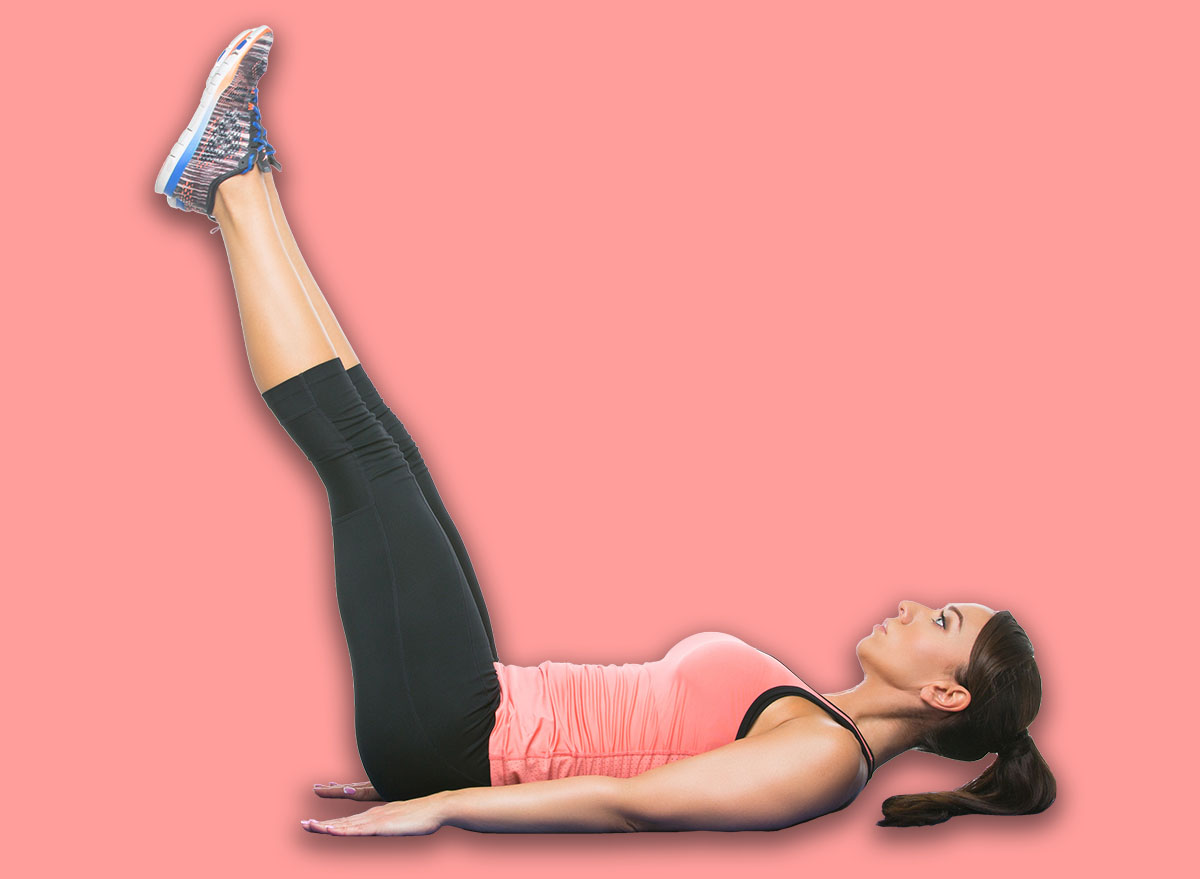
- Execution: Lie flat on your back with your legs extended straight and your arms resting comfortably at your sides, palms down for gentle support. Gently press your lower back into the mattress to minimize arching. Engaging your lower abdominal muscles, slowly lift both legs simultaneously several inches off the bed. The height of the lift should be determined by your ability to keep your lower back pressed into the mattress. Hold this elevated position for a brief moment, focusing on the contraction in your lower abdomen. Then, with meticulous control, slowly lower your legs back to the bed.
- Muscles Targeted: Primarily targets the lower fibers of the rectus abdominis and the hip flexors.
- Benefits for Seniors: Helps to re-engage and strengthen the often-neglected lower abdominal region, contributing to a more supported spine and improved core endurance. Performing it on a bed allows for careful monitoring of lumbar stability, reducing the risk of strain.
- Tips: If lifting both legs is too challenging, perform the exercise with one leg at a time, or keep your knees slightly bent. The crucial aspect is to prevent the lower back from arching excessively; if it lifts, reduce the range of motion or modify the exercise. Exhale as you lift and inhale as you lower.
4. Alternating Supine Marches
This dynamic exercise integrates core stability with hip flexion, mimicking the coordinated movements required for walking and climbing stairs. It reinforces the connection between core bracing and limb movement.
- Execution: Lie on your back with your knees bent at approximately a 90-degree angle and your feet flat on the bed, hip-width apart. Maintain a neutral spine. Engage your deep abdominal muscles. Slowly lift one knee toward your chest, lifting your foot off the bed while keeping your abdominal muscles tightly braced and your pelvis stable. Control the movement as you slowly lower that foot back to the bed. Immediately repeat the action with the opposite leg, creating a rhythmic, controlled marching motion.
- Muscles Targeted: Works the transverse abdominis, obliques, rectus abdominis, and hip flexors. It also engages the hip stabilizers on the supporting leg.
- Benefits for Seniors: Improves dynamic core stability and coordination, directly translating to better balance and gait efficiency. It strengthens the muscles crucial for functional movements like stepping up or lifting the knees.
- Tips: Focus on maintaining a level pelvis throughout the movement; avoid allowing your hips to rock from side to side. The speed should be slow and deliberate. Breathe naturally, exhaling as you lift the knee and inhaling as you lower it.
5. Elevated Leg Reaches
This exercise targets the upper abdominal muscles and enhances spinal flexion control, providing an effective core contraction without requiring the full range of motion of a traditional crunch, which can strain the neck or lower back.
- Execution: Lie flat on your back. Extend both legs directly upwards towards the ceiling, keeping them as straight as comfortable, but a slight bend in the knee is acceptable. Gently press your lower back into the mattress. Extend both arms straight towards the ceiling, aligning them with your shoulders. From this position, engage your upper abdominal muscles to slowly lift your head and shoulders off the bed, reaching your hands further towards your toes. The movement should be small and controlled, focusing on the abdominal contraction rather than pulling with the neck. Hold briefly at the peak of the reach, then slowly and with control, lower your shoulders and head back to the bed.
- Muscles Targeted: Primarily engages the upper rectus abdominis and the obliques.
- Benefits for Seniors: Strengthens the upper core without excessive neck strain, which is a common issue with traditional crunches. It promotes controlled spinal articulation and body awareness.
- Tips: Keep your gaze directed towards your knees or the ceiling to prevent neck strain. The movement should originate from your core, not your neck. If reaching for toes is too difficult, aim for your shins or knees. Exhale forcefully as you lift and inhale as you lower.
Integrating these supported core exercises into a daily routine can significantly enhance core strength and stability. The inherent comfort and accessibility of performing these movements on a bed make adherence more probable than with more strenuous or joint-taxing alternatives. Consistent practice, even for short durations each morning or evening, allows for a steady and progressive return of functional core strength. This sustained engagement not only builds muscle but also improves neuromuscular pathways, leading to enduring improvements in balance, posture, and the overall ease with which older adults navigate their daily lives, ultimately fostering greater independence and reducing the risk of age-related physical limitations.
About the Author