Strategic Ambulatory Interventions: Boosting Lower Body Muscularity and Resilience for Individuals Over Fifty

Maintaining robust leg strength is a cornerstone of healthy aging, contributing significantly to independence, mobility, and overall quality of life as individuals progress beyond midlife. While traditional gym workouts certainly offer avenues for muscle development, integrating specific modifications into one’s daily walking regimen can yield equally, if not more, profound benefits for lower body fortification, particularly for those over the age of fifty. This approach leverages the inherent functional nature of walking, translating directly into enhanced capabilities for everyday activities.
The human body undergoes various physiological transformations with advancing age, one of the most notable being sarcopenia—the progressive and generalized loss of skeletal muscle mass, strength, and function. This condition typically commences around the fourth decade of life, accelerating after age 50, and can lead to diminished physical performance, increased risk of falls, and a reduced capacity to perform routine tasks. Counteracting sarcopenia through consistent physical activity, especially resistance-based exercises, becomes paramount. While weightlifting in a gym setting is a well-established method for combating muscle loss, the accessibility and natural integration of walking into daily life present a compelling alternative or supplement, especially when strategically enhanced.
Walking, often perceived primarily as a cardiovascular exercise, possesses a multifaceted impact on health that extends far beyond merely strengthening the heart. Regular ambulatory activity can optimize metabolic function, support bone density, improve balance, and contribute to psychological well-being. Each step dynamically engages a complex network of lower body muscles, including the powerful gluteal muscles (glutes), the robust quadriceps (quads) at the front of the thigh, the hamstrings at the rear, and the calves. The beauty of walking lies in its ability to activate these muscle groups in a coordinated, functional manner, mimicking movements essential for daily living.

According to Domenic Angelino, a Certified Personal Trainer (CPT) affiliated with the International Personal Trainer Academy, an organization renowned for its NCCA-accredited CPT and Certified Nutrition Specialist (CNS) programs, certain refined walking techniques can surpass the efficacy of some gym-based routines in cultivating leg strength, particularly for the demographic over 50. Angelino highlights that walking offers superior advantages in enhancing aerobic capacity, which directly translates to improved endurance for sustained activities without experiencing premature fatigue. Furthermore, the muscular engagement during walking closely mirrors the biomechanics required for routine tasks such as climbing stairs, carrying groceries, or simply navigating varied terrains, making it an exceptionally practical form of strength training. This functional transferability is a key differentiator when comparing walking to isolated machine exercises often found in fitness centers.
The fundamental principle underlying muscle growth and strength enhancement, regardless of the exercise modality, is progressive overload. This concept dictates that for muscles to adapt and become stronger, they must be consistently challenged with greater demands than they are accustomed to. For walking, this translates into introducing additional resistance or modifying the movement pattern to intensify the muscular effort required with each stride. Angelino emphasizes that there are several safe and effective methods to achieve this, all designed to compel the lower body musculature to work harder, thereby stimulating adaptive responses.
Elevating Intensity Through Pace and Gradient Manipulation
One of the most accessible and impactful ways to augment leg strength during walking is by modifying the intensity of the activity itself. This can be achieved through two primary mechanisms: increasing walking speed or introducing an incline. Both strategies significantly amplify the resistance that the leg muscles must overcome, leading to greater strength gains.
When the pace of walking is accelerated, the muscles are recruited more rapidly and with greater force to propel the body forward. This heightened activation, especially over sustained periods, contributes to both muscular endurance and strength. The faster cadence demands more from the quads, hamstrings, and calves to manage propulsion and deceleration, while also engaging the core for stability. This increased muscular effort, sustained over time, initiates physiological adaptations that result in stronger, more resilient lower limbs.
Similarly, walking on an incline, whether on a treadmill or outdoors on a hilly path, dramatically increases the load on the lower body. As the body ascends, the glutes and quadriceps must work harder to lift the body against gravity, generating substantial power. The calves also experience increased engagement as they push off to initiate each step, developing greater explosive strength. The steeper the gradient, the more pronounced the muscular challenge, directly correlating with enhanced strength development. Incorporating inclines into a walking routine offers a powerful means of resistance training without needing external weights, making it an excellent option for those without access to traditional gym equipment.
A common and highly effective application of incline walking is stair climbing. Navigating stairs provides an excellent, readily available form of resistance training, mimicking a continuous series of mini-lunges and squats. This repetitive action builds strength in the quads, glutes, and calves while also improving cardiovascular fitness. However, Angelino issues a vital caution regarding stair-based workouts, particularly for older adults or those focusing on speed and intensity. While individuals may feel confident on stairs under normal circumstances, the risk of tripping escalates significantly when fatigued or consciously pushing for greater speed. It is crucial to prioritize safety by maintaining focus, using handrails when necessary, and gradually increasing intensity to prevent falls and injuries. Proper footwear with good traction is also advisable to minimize the risk of slips.
Incorporating External Resistance with Hand-Held Weights

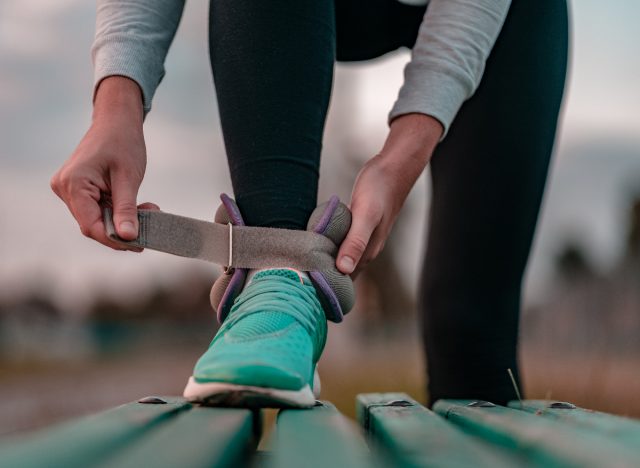
Another highly effective technique for amplifying leg strength during walking involves integrating external resistance in the form of free weights. Specifically, holding dumbbells or kettlebells in hand during short, concentrated bursts of walking can significantly increase the force required from the leg muscles. Angelino suggests performing these weighted walking intervals for durations of 30 to 60 seconds at a time, allowing for a strategic increase in muscular demand.
The mechanism behind this technique is straightforward: by adding weight that the body must carry, the leg muscles are compelled to generate more force with each step to support and move the additional mass. This increased demand stimulates muscle fibers, prompting them to adapt and grow stronger. A notable advantage of using hand-held weights, as opposed to ankle weights, is the more stable and balanced distribution of mass across the body. When heavy weights are held symmetrically in each hand, they naturally encourage a more upright posture and limit excessive arm swinging, which can sometimes destabilize the gait. This "built-in mechanism," as Angelino describes it, minimizes abrupt changes in the body’s center of gravity, thereby enhancing safety and reducing the risk of musculoskeletal strain compared to methods that might distribute weight less evenly. The leg muscles, particularly the glutes, quads, and calves, must work harder to stabilize the torso and propel the weighted body forward, leading to substantial strength improvements without compromising gait mechanics or balance.
Understanding Age-Related Physiological Changes
The emphasis on enhancing leg strength after age 50 is particularly relevant due to the aforementioned phenomenon of sarcopenia. This age-related muscle decline is not an inevitable fate, but rather a process that can be significantly mitigated and even reversed through targeted physical activity. Angelino underscores that it is entirely feasible for an individual to achieve greater strength at 55 than they possessed at 25, depending on their activity levels throughout their life. For instance, someone who adopts a consistent exercise regimen for the first time after 50 can often attain strength levels surpassing their sedentary younger self, demonstrating the remarkable adaptability of the human body at any age. Conversely, individuals who were highly active in their youth but become inactive later in life may experience a more pronounced and rapid decline in muscle mass and strength compared to someone who maintained a baseline level of activity, highlighting the importance of sustained engagement.

Beyond the reduction in muscle mass, aging often brings a concomitant decrease in muscular power—the ability to generate force quickly. This reduction in power is critical for reactive movements, such as catching oneself during a stumble, and its decline is closely linked to an elevated risk of falls, which can have severe consequences for older adults. Furthermore, the cumulative effects of minor injuries, chronic conditions, or prolonged periods of inactivity due to health issues can exacerbate muscle atrophy. As Angelino points out, conditions like a problematic hip, an unstable knee, or even systemic issues such as chronic fatigue syndrome can lead to reduced mobility and increased bed rest, which in turn causes leg muscles to weaken and shrink more rapidly. Proactive engagement in strength-building activities like enhanced walking becomes a vital strategy in preserving mobility, independence, and overall functional capacity throughout the aging process.
Integrating Enhanced Walking into a Holistic Fitness Regimen
For individuals seeking to optimize their lower body strength and overall well-being beyond midlife, incorporating these advanced walking techniques offers a practical, effective, and accessible solution. It is crucial to approach these modifications progressively, starting with manageable intensities and gradually increasing the challenge as strength improves. This adherence to the principle of progressive overload ensures continuous adaptation and avoids overwhelming the body. Listening to one’s body, maintaining proper form, and ensuring adequate recovery are essential components of any successful fitness program, preventing injury and promoting sustained progress.
While these walking techniques can significantly contribute to leg strength, they should ideally be part of a broader, holistic fitness regimen that also addresses flexibility, balance, and other forms of resistance training for a well-rounded approach to physical health. Consulting with a healthcare professional or a certified fitness expert like Domenic Angelino before embarking on new exercise routines is always recommended, especially for individuals with pre-existing health conditions or those new to structured physical activity. By transforming the simple act of walking into a powerful strength-building exercise, individuals over 50 can actively reclaim and enhance their physical vitality, ensuring a more active, independent, and fulfilling life. The path to stronger legs, improved balance, and greater functional capacity can literally begin with a few strategic steps, consistently applied and thoughtfully intensified.
Related posts:

Related News