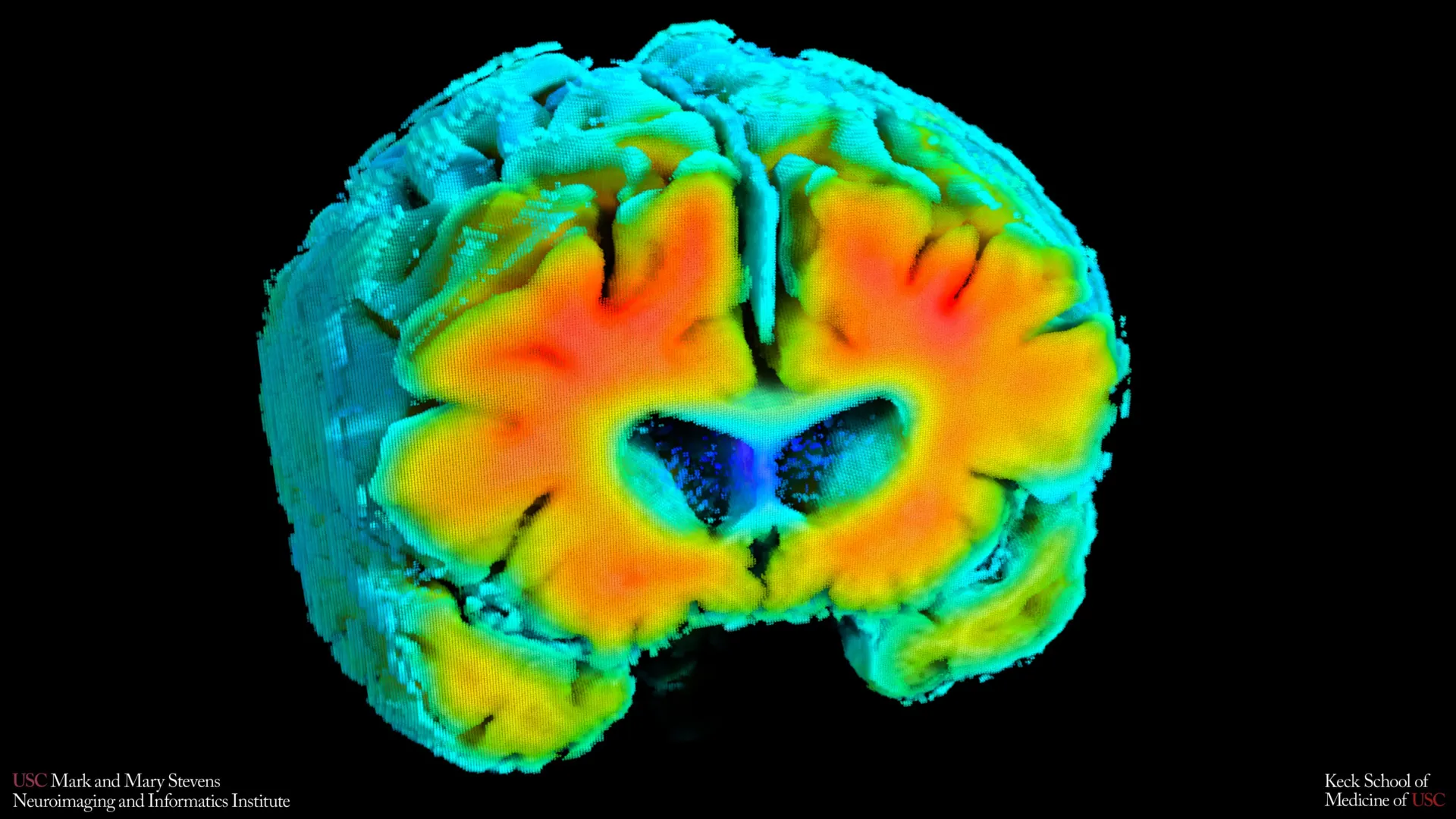
The intricate dance of blood flow within the brain and the precise delivery of oxygen to its myriad cells may hold profound implications for understanding the initial stages of Alzheimer’s disease. Groundbreaking research from the Mark and Mary Stevens Neuroimaging and Informatics Institute (Stevens INI) at the Keck School of Medicine of USC suggests that disturbances in these fundamental physiological processes are intimately connected to the onset and progression of neurodegeneration, potentially offering a silent harbinger of future cognitive decline. This study challenges the long-held primary focus solely on amyloid plaques and tau tangles, advocating for a more comprehensive view of Alzheimer’s etiology that integrates cerebrovascular health as a pivotal, early contributor.
Published in the esteemed journal Alzheimer’s and Dementia: The Journal of the Alzheimer’s Association, the investigation scrutinized a cohort of older adults, encompassing individuals with varying degrees of cognitive function, from unimpaired to those experiencing mild cognitive impairment or diagnosed dementia. Researchers employed innovative, non-invasive diagnostic tools to assess the efficiency of cerebral circulation and tissue oxygenation. Their findings revealed a compelling association between these simple yet powerful measures of brain vascular health and established biological indicators of Alzheimer’s disease, including the pathological accumulation of amyloid protein and the measurable shrinkage of the hippocampus, a brain region critical for memory formation and retrieval. These results underscore the potential for the brain’s vascular system to influence the disease trajectory from its very nascent stages, offering a promising avenue for identifying at-risk individuals long before overt clinical symptoms manifest.
Traditionally, the scientific community’s understanding of Alzheimer’s disease has predominantly centered on the neuronal pathology characterized by the abnormal deposition of beta-amyloid proteins outside neurons and the formation of neurofibrillary tangles composed of hyperphosphorylated tau protein inside neurons. While these hallmarks remain undeniably central to the disease, a growing body of evidence, bolstered significantly by this USC study, points to the crucial involvement of the cerebrovascular system. The brain, consuming a disproportionately large share of the body’s oxygen and glucose, is exquisitely sensitive to even minor disruptions in blood supply. Impaired cerebral blood flow can lead to chronic hypoxia (insufficient oxygen) and ischemia (restricted blood supply), fostering an environment of oxidative stress, inflammation, and impaired waste clearance, all of which can directly or indirectly contribute to neuronal dysfunction and the acceleration of amyloid and tau pathologies.
Amaryllis A. Tsiknia, the lead author of the study and a USC PhD candidate, emphasized this shifting perspective. "While amyloid and tau have rightfully garnered significant attention as central players in Alzheimer’s pathogenesis, the critical roles of blood flow and oxygen delivery to brain tissue are increasingly evident," Tsiknia explained. "Our investigation demonstrates a clear correlation: when the brain’s vascular system operates with a robustness akin to that observed in healthy aging, we simultaneously observe neural characteristics linked to superior cognitive health." This statement highlights a fundamental re-evaluation of the disease’s origins, suggesting that vascular integrity might serve as a protective factor or that its compromise could be an early instigator.
To meticulously quantify these subtle yet impactful changes in cerebrovascular function, the research team leveraged two distinct, non-invasive methodologies that can be implemented while a participant is comfortably at rest. The first, Transcranial Doppler (TCD) ultrasound, utilizes sound waves to precisely monitor the velocity and characteristics of blood flow through the brain’s major arteries. This technique provides real-time data on how quickly blood is being propelled through critical cerebral vessels. The second technique, Near-Infrared Spectroscopy (NIRS), assesses the effectiveness with which oxygen permeates the superficial cortical brain tissue by measuring the absorption of light by oxygenated and deoxygenated hemoglobin. NIRS offers insights into the metabolic activity and oxygen utilization at the tissue level.
Crucially, the researchers did not simply rely on these raw measurements. They applied sophisticated mathematical modeling to integrate the data derived from both TCD and NIRS. This advanced analytical approach allowed them to synthesize comprehensive indicators of cerebrovascular function, reflecting the brain’s ability to maintain stable blood flow and oxygen supply despite natural physiological fluctuations in blood pressure and carbon dioxide levels. This capacity, known as cerebrovascular reactivity and autoregulation, is vital for neuronal health and optimal brain function. A compromised ability to regulate these parameters suggests a brain struggling to meet its metabolic demands.
The study’s findings provided compelling evidence for the link between robust vascular health and reduced Alzheimer’s risk markers. Participants whose composite vascular indicators more closely resembled those of cognitively healthy adults consistently exhibited lower levels of amyloid accumulation within the brain and maintained a larger hippocampal volume. Both these characteristics are widely recognized as being associated with a diminished risk of developing Alzheimer’s disease. The hippocampus, crucial for learning and memory, is one of the first brain regions to show atrophy in Alzheimer’s, and amyloid plaques are a defining pathological feature. The direct correlation between vascular function and these key markers suggests a mechanistic link where healthy blood flow might aid in clearing amyloid or protecting hippocampal neurons from damage.
Meredith N. Braskie, PhD, the senior author of the study and an assistant professor of neurology at the Keck School of Medicine, underscored the significance of these correlations. "These vascular metrics are clearly capturing something profoundly meaningful about the overall health of the brain," Braskie noted. "They demonstrate a strong alignment with the information typically gleaned from MRI and PET scans, which are standard tools in Alzheimer’s research. This alignment provides critical new insights into the intricate relationship between vascular well-being and established neuroimaging markers of Alzheimer’s risk." This suggests that TCD and NIRS could potentially serve as complementary, or even alternative, screening tools to the more resource-intensive imaging modalities.
Further reinforcing the notion of vascular involvement across the disease spectrum, the research team observed a marked impairment in cerebrovascular function among individuals already diagnosed with mild cognitive impairment (MCI) or full-blown dementia, when compared to their cognitively normal counterparts. This observation strongly supports the evolving understanding that a decline in the health of the brain’s blood vessels is not merely a late-stage consequence but an integral component of the broader Alzheimer’s disease continuum, potentially contributing to its initiation and progression at earlier stages.
Arthur W. Toga, PhD, director of the Stevens INI, articulated the broader implications of these findings. "This research adds substantial weight to the accumulating evidence that Alzheimer’s pathology involves significant vascular contributions, alongside the more traditionally recognized neurodegenerative changes," Toga stated. "A deeper comprehension of how cerebral blood flow and oxygen regulation dynamically interact with amyloid pathology and structural brain alterations unlocks exciting new avenues for both early disease detection and, crucially, for the development of preventative strategies." This perspective fundamentally expands the landscape of therapeutic targets beyond amyloid and tau.
One of the most compelling aspects of this research lies in the potential for broader and earlier screening. Compared to the high costs, logistical complexities, and invasive nature (injections, radiation exposure, demanding cognitive tasks) of conventional MRI and PET imaging, TCD and NIRS offer a dramatically simplified and more accessible alternative. Their non-invasive nature, portability, and relative affordability make them ideal candidates for large-scale population screening initiatives, particularly in primary care settings or for individuals who may be unable or unwilling to undergo more intensive neuroimaging procedures. This could democratize early risk assessment, reaching a much wider demographic.
However, the authors prudently caution that the current findings represent a cross-sectional snapshot in time. While the correlations are robust, this study design inherently does not establish a definitive cause-and-effect relationship. To fully elucidate the predictive power and causal role of vascular changes, ongoing longitudinal studies are paramount. These future investigations will meticulously track participants over extended periods to determine whether specific shifts in these vascular measures can reliably predict future cognitive decline or assess the efficacy of interventions aimed at improving cerebrovascular health.
"If we can effectively monitor these vascular signals over time, we gain the unprecedented ability to identify individuals at a heightened risk for Alzheimer’s earlier than ever before," Tsiknia mused. "Furthermore, this opens up a crucial research pathway to test whether targeted interventions designed to enhance overall vascular health can genuinely slow down or mitigate the Alzheimer’s-related pathological changes observed in the brain." Such interventions could range from pharmaceutical approaches to lifestyle modifications, including diet, exercise, and diligent management of cardiovascular risk factors like hypertension and diabetes.
The study’s co-authors include Peter S. Conti, Rebecca J. Lepping, Brendan J. Kelley, Rong Zhang, Sandra A. Billinger, Helena C. Chui, and Vasilis Z. Marmarelis. This seminal work was generously supported by funding from the Office of The Director, National Institutes of Health, under Award Number S10OD032285, and by the National Institute on Aging under Award Number R01AG058162. Their collective efforts have significantly advanced the understanding of Alzheimer’s disease, firmly positioning cerebrovascular health as a critical, and potentially manipulable, factor in the fight against this devastating neurodegenerative condition.
About the Author