The landscape of professional life has undergone a profound transformation, with remote work becoming a prevalent norm for countless individuals. While offering unparalleled flexibility, this shift frequently introduces extended periods of sedentary behavior, presenting unique challenges for maintaining physical well-being, particularly for those navigating the physiological changes that accompany midlife, typically defined as individuals over 50. The convergence of prolonged sitting, diminished incidental movement, and the natural metabolic deceleration associated with aging can contribute to a weakening of the core musculature and an increase in central adiposity. However, cultivating a robust core and optimizing metabolic function remains achievable, even within the confines of a home office, through strategically integrated, seated physical activity.
As individuals progress beyond their fifth decade, the body undergoes several notable physiological shifts that can impact body composition and overall health. One of the most significant is sarcopenia, the age-related decline in skeletal muscle mass and strength. Muscle tissue is metabolically active, meaning it burns more calories at rest compared to fat tissue. Consequently, a reduction in muscle mass leads to a lower basal metabolic rate, making it more challenging to manage weight and prevent fat accumulation. This phenomenon is often exacerbated by hormonal fluctuations, such as those experienced during menopause in women or andropause in men, which can influence fat distribution, favoring deposition around the abdominal area—often referred to as visceral fat. This type of fat is not merely a cosmetic concern; it is metabolically active and linked to increased risks of various health conditions, including cardiovascular disease and type 2 diabetes.
The sedentary nature of remote work compounds these age-related factors. The daily commute, once a source of incidental physical activity, has been largely eliminated for many. The proximity of the kitchen often leads to more frequent, perhaps less mindful, snacking. Hours spent hunched over a computer can also contribute to poor posture, which further weakens core muscles and can lead to discomfort or pain in the back and neck. This combination of reduced physical activity, metabolic slowdown, and altered dietary habits creates a fertile ground for the development of what is colloquially known as a "midsection overhang" – a condition that signals not only aesthetic changes but also underlying health implications.
Fortunately, addressing these challenges does not necessitate a complete overhaul of one’s workday or significant investment in gym equipment. Integrating brief, targeted exercises into the existing workday structure offers a pragmatic and highly effective solution. The beauty of seated exercises lies in their accessibility and low-impact nature. They can be performed virtually anywhere a chair is present, reducing barriers to participation. Moreover, performing movements from a seated position can often help isolate specific muscle groups, minimizing compensatory "cheating" movements that might occur when standing, thereby enhancing the effectiveness of each repetition. Fitness experts, like those at Studio Pilates International, advocate for these precise, controlled movements to help individuals over 50 strengthen their core and improve overall body composition.
Here are five foundational seated exercises designed to invigorate your core and support metabolic health, easily integrated into your remote workday:
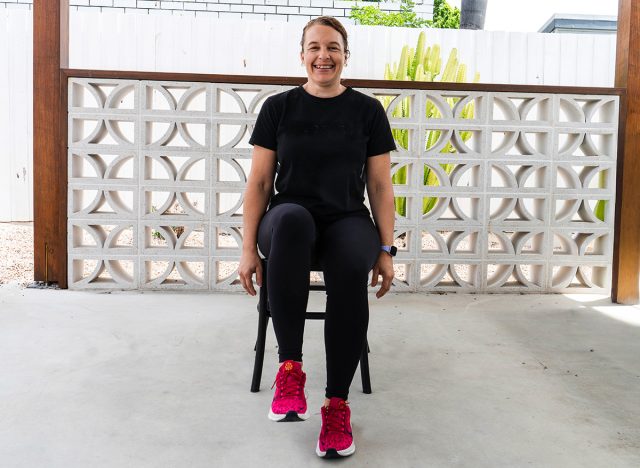
1. Deep Abdominal Engagement (Seated Foot Lifts)
- Mechanism of Action: This exercise primarily targets the transverse abdominis, the deepest abdominal muscle, which acts like a natural corset, stabilizing the spine and flattening the lower abdomen. It also serves as an excellent primer for subsequent movements.
- Execution Protocol: Begin by sitting upright with your feet flat on the floor, hip-width apart. Maintain a neutral spine, avoiding slouching or arching. Engage your core by drawing your naval gently towards your spine, as if zipping up tight jeans. While maintaining this core engagement, slowly lift one foot a few inches off the floor, holding briefly before gently lowering it. Alternate between feet. Focus on controlled, deliberate movement rather than speed.
- Optimal Form Cues: Ensure your upper body remains still and upright; avoid leaning back or shrugging your shoulders. Breathe rhythmically throughout the exercise, preventing breath-holding, which can reduce core activation.
- Recommended Volume: Aim for 20 repetitions, alternating legs.
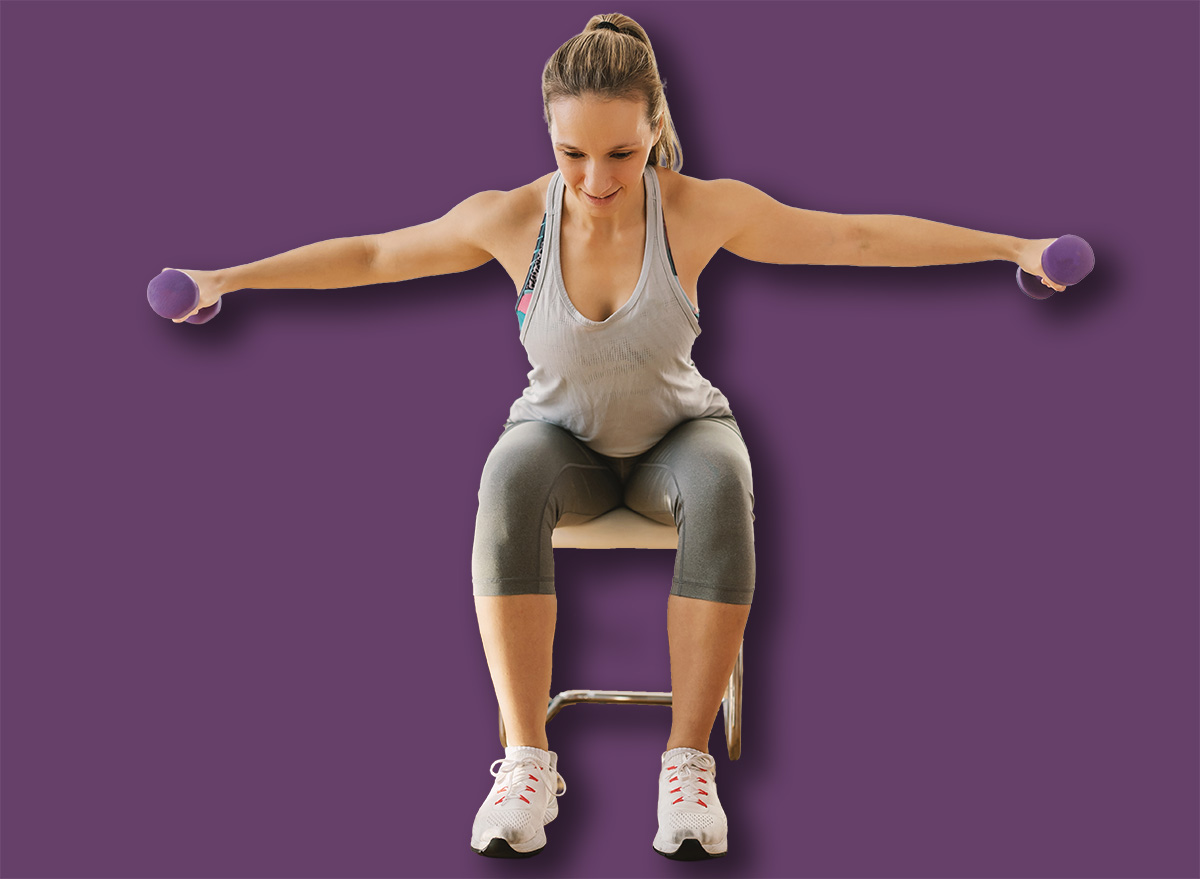
2. Upper Body Muscle Activation (Seated Lateral Raises)
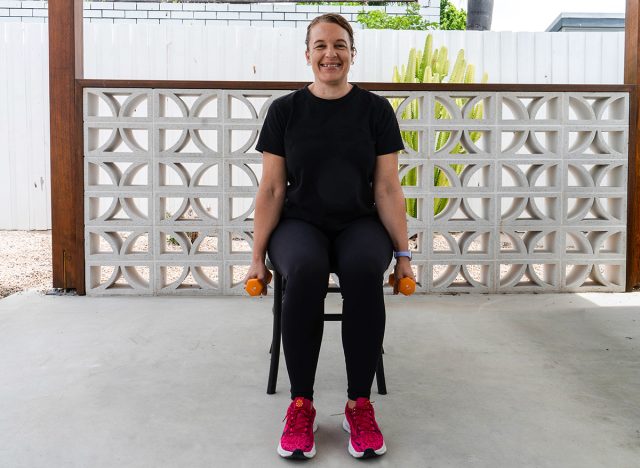
- Mechanism of Action: While primarily an arm exercise, lateral raises contribute to overall metabolic health by building muscle mass in the shoulders. Increased muscle mass across the body contributes to a higher resting metabolic rate, aiding in fat burning. This exercise also promotes shoulder stability and strength.
- Execution Protocol: Sit tall with a straight back, feet grounded. Hold light weights (or water bottles/cans) in each hand, arms hanging at your sides with a slight bend in the elbows, palms facing your thighs. Slowly raise your arms out to the sides, leading with your elbows, until they reach shoulder height, forming a "T" shape with your body. Pause briefly at the top, then slowly lower the weights back to the starting position.
- Optimal Form Cues: Control the movement both on the way up and down; avoid using momentum or swinging the weights. Keep your shoulders relaxed and down, away from your ears, to prevent shrugging.
- Recommended Volume: Perform 20 repetitions.
3. Oblique and Spinal Mobility (Seated Side Bends)
- Mechanism of Action: This movement specifically targets the oblique muscles along the sides of your torso, which are crucial for rotational stability and maintaining a toned waistline. It also enhances spinal flexibility in the lateral plane.
- Execution Protocol: Sit upright with your feet firmly planted. Place one hand behind your head or on your hip, and extend the other arm downwards towards the floor. Keeping your core engaged and hips stable, slowly bend sideways towards the extended arm, feeling a stretch along the opposite side of your torso. Focus on bending directly from your waist, not just leaning forward. Return to the starting position with control.
- Optimal Form Cues: Initiate the bend from the side of your waist, maintaining an open chest. Avoid rounding your back or shrugging your shoulders towards your ears. Keep your gaze forward.
- Recommended Volume: Complete 20 repetitions, performing 10 on each side.
4. Functional Lower Body Strength (Sit to Stand)
- Mechanism of Action: This fundamental movement is a powerhouse for building strength in the quadriceps, hamstrings, and glutes—major muscle groups in the lower body. Strengthening these large muscles significantly boosts overall muscle mass, enhancing metabolic activity and improving functional independence for daily tasks.
- Execution Protocol: Position yourself on the edge of a sturdy chair, feet flat on the floor, slightly wider than hip-width. Lean forward slightly from your hips, engaging your core. Without using your hands for support or generating momentum, push through your heels to stand up fully. Control the movement as you slowly lower yourself back down to the seated position, lightly touching the chair before standing again.
- Optimal Form Cues: Ensure your knees track over your toes and do not collapse inward. Avoid using your arms or rocking forward to gain momentum. Focus on a smooth, controlled ascent and descent.
- Recommended Volume: Execute 20 repetitions.
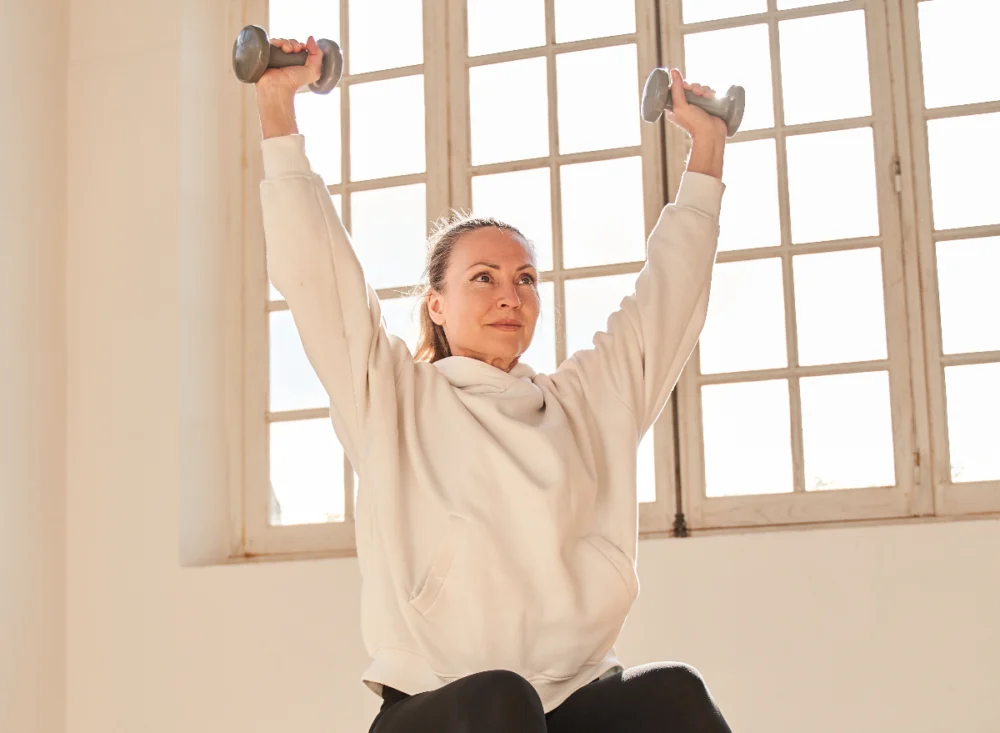
5. Comprehensive Upper Body and Core Integration (Seated Overhead Press)
- Mechanism of Action: The seated overhead press strengthens the shoulders, triceps, and upper back. Critically, it demands significant stabilization from the core and spinal muscles to maintain proper posture throughout the movement, making it an excellent exercise for integrated upper body and trunk strength.
- Execution Protocol: Sit tall with a neutral spine, feet flat. Hold light dumbbells (or household items) at shoulder height, palms facing forward or inwards, elbows bent and tucked slightly forward. Exhale as you press the weights directly overhead until your arms are fully extended but not locked. Inhale as you slowly lower the weights back to the starting position with control.
- Optimal Form Cues: Maintain a stable core and avoid arching your lower back as you press the weights up. Keep your neck relaxed, preventing tension in the cervical spine. The movement should be deliberate, not rushed.
- Recommended Volume: Perform 20 repetitions.
Seamlessly Integrating Movement into Your Workday

The key to unlocking the benefits of these exercises lies in consistent integration, not in lengthy, exhaustive sessions. Rather than viewing them as traditional "workouts," consider them "movement snacks" or "micro-breaks" strategically sprinkled throughout your day. Aim for four to five short sessions per week, each lasting merely 5 to 10 minutes. This approach makes physical activity less daunting and more sustainable.
Consider incorporating these movements between virtual meetings, during brief breaks from email, or whenever you notice yourself slumping. The cumulative effect of multiple short bursts of activity can be profound, providing continuous muscular stimulation throughout the week without disrupting your work rhythm. This mindset fosters adherence, which is the true driver of long-term physical improvements.
Anticipated Progress and Realistic Expectations

It is important to emphasize that "spot reduction" of fat from specific areas is a physiological myth. However, consistent engagement with these exercises, combined with healthy lifestyle choices, will contribute to overall fat loss and improved body composition, leading to a more toned midsection. Within approximately two weeks, most individuals report feeling noticeably stronger and more stable in their core. Subtle visual changes, such as improved posture, a firmer abdominal region, and reduced discomfort in the back, typically become apparent around the four to six-week mark. Beyond aesthetics, you can expect enhanced functional strength, better balance, and increased energy levels.
Synergistic Nutritional Adjustments for Enhanced Results
Physical activity alone is only one component of a holistic approach to metabolic health and body composition. Complementing your exercise routine with mindful dietary choices can significantly amplify your results. Small, sustainable nutritional shifts can yield substantial benefits:

- Prioritize Protein Intake: Adequate protein is crucial for preserving and building muscle mass, especially as we age. Incorporate lean protein sources such as poultry, fish, legumes, and dairy into every meal.
- Increase Fiber Consumption: Foods rich in fiber, like fruits, vegetables, and whole grains, promote satiety, regulate blood sugar levels, and support digestive health, all contributing to better weight management.
- Maintain Optimal Hydration: Drinking sufficient water throughout the day is essential for metabolic processes, can help differentiate between hunger and thirst, and contributes to overall cellular function.
- Practice Mindful Eating: In a home office environment, it’s easy to eat distractedly. Pay attention to hunger and fullness cues, and savor your meals to prevent overconsumption.
- Limit Processed Foods: Minimize intake of highly processed snacks and sugary beverages, which often provide empty calories and contribute to fat storage without offering significant nutritional value.
By thoughtfully integrating these accessible, seated exercises into your remote work routine and coupling them with prudent nutritional choices, you empower yourself to proactively manage age-related physiological changes and the challenges of a sedentary lifestyle. This holistic approach fosters not only a stronger, more supported core but also a foundation for sustained health and vitality well into your later years.
About the Author