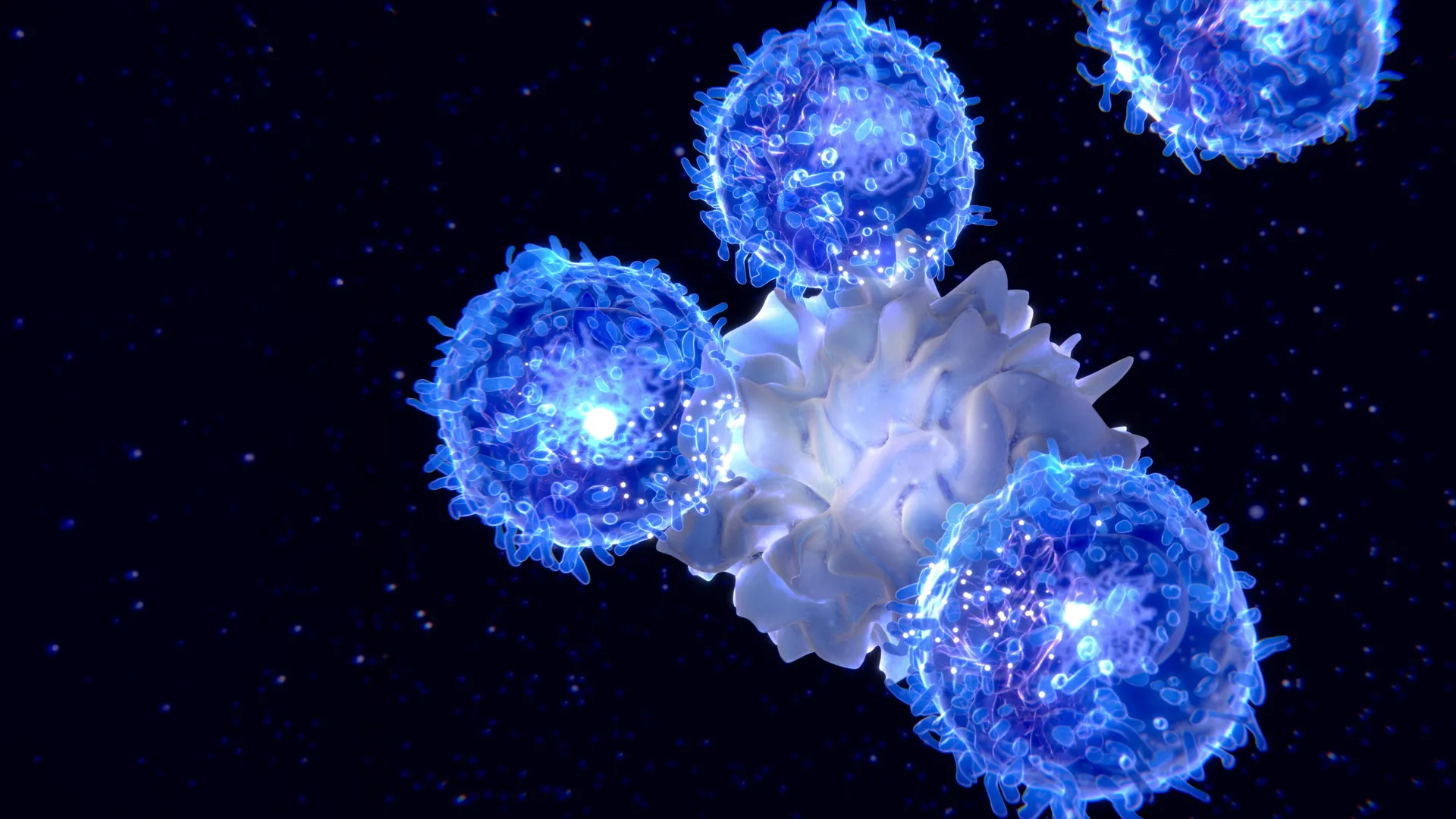
As individuals advance in years, a pervasive physiological transformation known as immunosenescence progressively compromises the efficacy of the body’s defensive mechanisms. This age-related decline manifests notably in the adaptive immune system, specifically impacting populations of T lymphocytes, or T cells. These critical components of immunity, responsible for identifying and eliminating pathogens and aberrant cells, diminish in quantity and exhibit reduced responsiveness over time. The consequence is a heightened vulnerability to a spectrum of infections, diminished vaccine effectiveness, and an increased incidence of certain malignancies among older demographics. This fundamental challenge to human health and longevity has prompted extensive scientific inquiry into methods for mitigating the immune system’s inevitable decay.
Addressing this widespread issue, a groundbreaking research endeavor spearheaded by scientists at the Massachusetts Institute of Technology (MIT) and the Broad Institute of MIT and Harvard has unveiled an innovative strategy. Their work focuses on temporarily re-engineering hepatic cells—the primary cells of the liver—to act as a transient biological factory. This engineered liver system is designed to produce vital molecular signals that enhance the vitality and functionality of T cells, thereby compensating for the natural diminishment of thymic output, the crucial organ where T cells typically undergo their maturation process.
The investigation, detailed in the prestigious scientific journal Nature, utilized messenger RNA (mRNA) as a delivery mechanism. This genetic material was employed to introduce instructions for three specific immune-modulatory factors into liver cells. The efficacy of this novel approach was robustly demonstrated in preclinical trials involving murine models. Older mice subjected to this treatment displayed a remarkable regeneration of their immune systems, characterized by the generation of more abundant and diverse T cell repertoires following vaccination. Furthermore, these treated animals exhibited significantly improved outcomes when subjected to cancer immunotherapy regimens.
The implications of this research are profound. If successfully translated into clinical applications for human patients, this methodology holds the promise of extending the "healthspan"—the period of life spent in good health—for countless individuals. Dr. Feng Zhang, the James and Patricia Poitras Professor of Neuroscience at MIT, a senior author of the study and a prominent figure in gene-editing research, articulated the broader vision: "If we can restore something as fundamental as the immune system, our aspiration is to empower people to remain disease-free for a greater duration of their lives." Dr. Mirco Friedrich, formerly an MIT postdoctoral fellow and the lead author of the publication, played a pivotal role in this discovery.
Central to understanding the rationale behind this research is the thymus, a small, bilobed organ situated in the chest, anterior to the heart. This gland is indispensable for the meticulous process of T cell development and diversification. Within its unique microenvironment, immature T cells undergo a rigorous education, involving positive and negative selection, which ensures they can recognize foreign invaders while tolerating the body’s own tissues. The thymus also secretes various cytokines and growth factors vital for the survival and proliferation of these developing lymphocytes.
However, the thymus is unfortunately one of the first organs to undergo age-related degeneration, a process termed thymic involution. This atrophy typically commences in early adulthood and accelerates progressively. By approximately 75 years of age, the thymus is largely vestigial and functionally inert, severely impairing the body’s capacity to generate new, naïve T cells. This decline in thymic function directly contributes to the observed reduction in the overall T cell pool and the diminished diversity of the T cell receptor repertoire, leaving the elderly less equipped to combat novel pathogens or effectively respond to immunizations. As Dr. Friedrich observed, "As we grow older, the immune system inevitably begins to wane. Our objective was to explore strategies for sustaining this critical immune protection for a longer timeframe, which ultimately guided us toward exploring methods to enhance immunity."
Previous scientific endeavors aimed at revitalizing the immune system have explored various avenues, each with its own set of challenges. Some research has focused on administering systemic T cell growth factors, a strategy that often encounters significant hurdles due to the potential for widespread, undesirable side effects. Other investigative paths have delved into the complex realm of regenerative medicine, exploring whether transplanted stem cells could facilitate the regrowth of functional thymic tissue. While promising, such approaches often involve intricate surgical procedures and significant biological complexities.
The MIT team, however, deliberately charted a distinct course. Their core inquiry revolved around the intriguing possibility of coaxing the body itself to establish a transient "manufacturing hub" capable of producing the precise T cell-stimulating signals normally originating from the thymus. This "synthetic approach," as Dr. Zhang characterized it, involves "engineering the body to emulate thymic factor secretion."
The liver was strategically chosen as the optimal site for this temporary bioreactor, owing to several compelling physiological advantages. Firstly, the liver maintains a robust capacity for protein synthesis even into advanced age, ensuring a reliable production platform. Secondly, the liver’s unique anatomical and physiological characteristics make it a particularly accessible organ for the targeted delivery of mRNA-carrying lipid nanoparticles, which are efficiently taken up by hepatocytes. Thirdly, and critically for immune modulation, all circulating blood, including T cells, continuously traverses the liver. This anatomical arrangement renders the liver an ideal conduit for the sustained release of immune-supportive signals directly into the bloodstream, where they can readily interact with and influence T cell populations.
To construct this transient cellular factory, the researchers meticulously identified three crucial immune-modulating cues known to be intimately involved in T cell maturation and survival. These factors – Delta-like ligand 1 (DLL1), Fms-like tyrosine kinase 3 ligand (FLT-3), and Interleukin-7 (IL-7) – were encoded into mRNA sequences. These mRNA constructs were then encapsulated within lipid nanoparticles (LNPs), a delivery technology that has gained prominence for its role in next-generation vaccines. Upon intravenous injection, these LNPs preferentially accumulate within the liver. Once internalized by hepatocytes, the mRNA is translated into the specified proteins, effectively transforming the liver cells into producers of these vital immune signals. These three factors collectively orchestrate the differentiation of immature progenitor T cells into fully functional, mature T lymphocytes.
The preclinical studies in mice yielded highly encouraging results, demonstrating multiple positive outcomes. In one key experiment, the mRNA particles were administered to 18-month-old mice, an age roughly analogous to humans in their 50s, representing a stage where immunosenescence typically begins to manifest. Given the inherent transient nature of mRNA in the body, the research team administered repeated doses over a four-week period, ensuring a consistent production of the therapeutic factors by the liver. Following this intervention, a substantial increase in both the size and functional capacity of T cell populations was observed.
The team subsequently investigated whether this innovative approach could enhance vaccine responses, a critical metric for immune competence in older individuals. Mice were immunized with ovalbumin, a protein derived from egg whites commonly employed as a model antigen in immunological studies. Remarkably, in the 18-month-old mice that received the mRNA treatment prior to vaccination, the numbers of cytotoxic T cells specifically targeting ovalbumin doubled compared to untreated control mice of the same age. This finding suggests a significantly improved ability to mount a robust and effective immune response against a specific foreign invader.
Further extending the therapeutic potential, the researchers explored whether the mRNA-based method could augment responses to cancer immunotherapy. In this arm of the study, 18-month-old mice were first treated with the mRNA formulation, then implanted with tumors, and subsequently received a checkpoint inhibitor drug. This class of drugs, exemplified by agents targeting PD-L1, functions by releasing the natural "brakes" on the immune system, thereby empowering T cells to more effectively identify and eradicate tumor cells. The results were striking: mice that received the combined treatment of the checkpoint inhibitor and the mRNA intervention exhibited significantly higher survival rates and lived longer compared to mice that received only the checkpoint inhibitor drug. This underscores the potential of the liver-reprogramming strategy to potentiate existing cancer treatments by rejuvenating the immune system’s anti-tumor capabilities.
A critical finding from the study was the necessity of all three factors—DLL1, FLT-3, and IL-7—to achieve the observed immune improvements. No single factor, when administered in isolation, could fully replicate the comprehensive beneficial effects. Looking ahead, the research team is committed to further validating this approach in additional animal models, moving beyond mice to larger, more complex systems. They also intend to meticulously screen for other potential signaling factors that could further enhance or broaden immune function. Furthermore, a key area of future investigation will involve examining how this treatment influences other vital immune cell types, including B cells, which are responsible for antibody production.
This pioneering research, supported by various institutions including the Howard Hughes Medical Institute, the K. Lisa Yang Brain-Body Center at MIT, Broad Institute Programmable Therapeutics Gift Donors, the Pershing Square Foundation, the Phillips family, J. and P. Poitras, and an EMBO Postdoctoral Fellowship, represents a significant stride in the quest to counter the detrimental effects of immunosenescence. The collaborative efforts of a distinguished team, including Julie Pham, Jiakun Tian, Hongyu Chen, Jiahao Huang, Niklas Kehl, Sophia Liu, Blake Lash, Fei Chen, Xiao Wang, and Rhiannon Macrae, underscore the interdisciplinary nature of this scientific breakthrough. By strategically leveraging the body’s own metabolic machinery through mRNA technology, these scientists have opened a novel therapeutic avenue with the potential to fundamentally transform healthy aging and disease prevention.
About the Author