
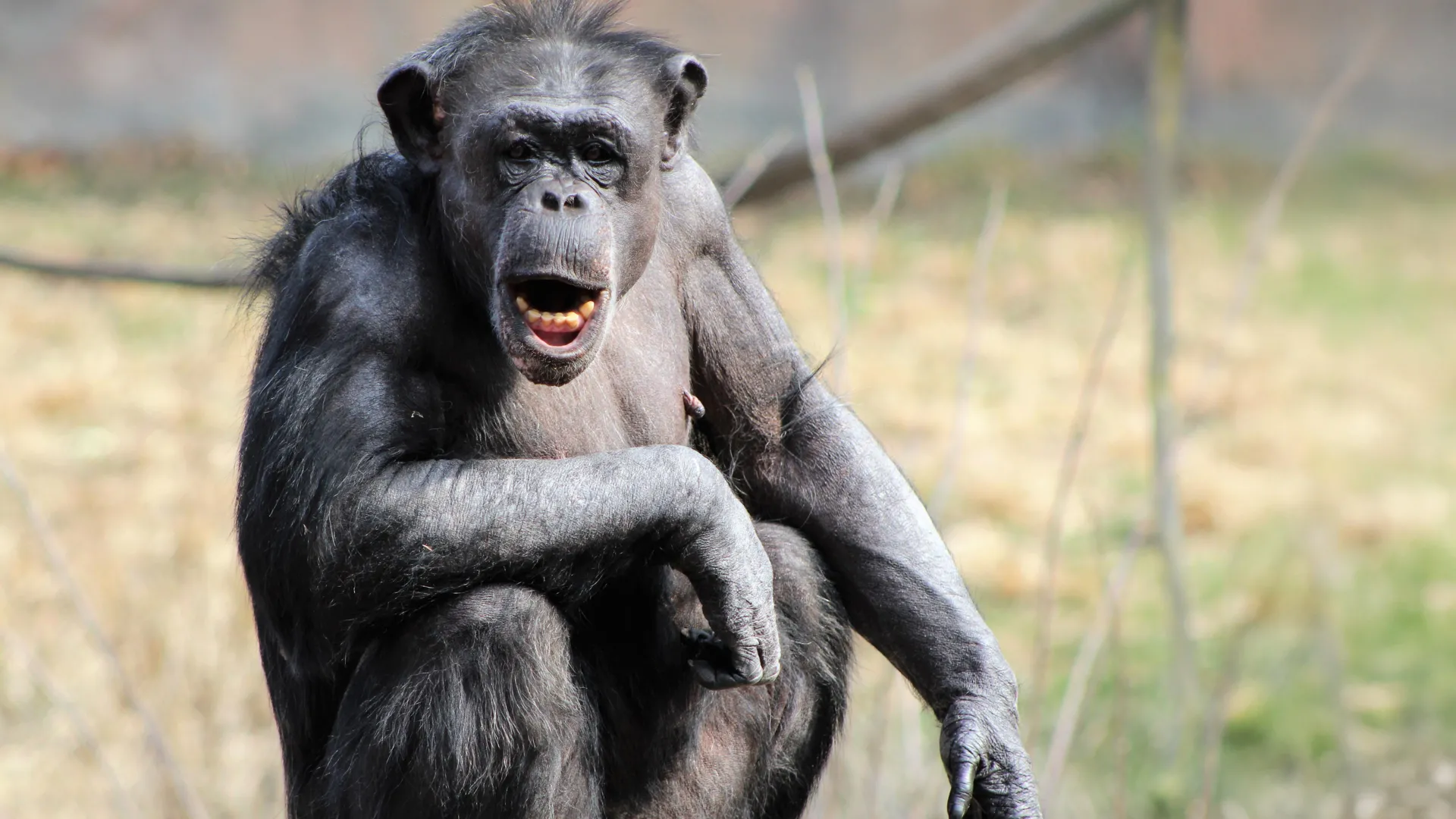
A groundbreaking investigation conducted by researchers at the University of Geneva (UNIGE) has uncovered a surprising affinity within the human brain for the vocalizations of our closest primate relatives, suggesting a far more ancient evolutionary foundation for auditory processing than previously understood. Contrary to the long-held assumption that the human auditory system is primarily tuned to its own species’ sounds, this research demonstrates that specific neural pathways within the auditory cortex exhibit a pronounced and distinct response to chimpanzee vocalizations. This finding, detailed in the esteemed scientific journal eLife, provides compelling evidence that certain brain regions may possess an inherent specialization for processing the calls of particular primate lineages, opening novel avenues for exploring the genesis of voice recognition and its intricate connections to the development of human language.
The intricate tapestry of human social interaction is woven with the threads of vocal communication, with a substantial portion of the brain’s auditory processing center dedicated to deciphering the nuances of spoken language. This fundamental role of human voices prompted scientists to ponder whether these sophisticated perceptual abilities might possess deeper, evolutionary origins, predating the emergence of complex human language. To unravel this evolutionary puzzle, a multidisciplinary team from UNIGE’s Faculty of Psychology and Educational Sciences embarked on a comparative neurological study. By meticulously examining how the human brain processes the vocal repertoire of species closely aligned with us in evolutionary terms, including chimpanzees, bonobos, and macaques, the researchers sought to pinpoint shared neural traits with other primates. This evolutionary-informed approach serves as a critical lens through which to illuminate the nascent stages of neural architecture supporting vocal communication, suggesting that its foundations were laid long before the advent of articulate speech.
To rigorously test their hypotheses, the experimental protocol involved 23 human participants who were exposed to a curated selection of vocalizations from four distinct species, with human voices serving as the baseline control. The inclusion of chimpanzee calls was deliberate, given their close genetic and acoustic kinship to humans. Bonobo vocalizations were also incorporated, despite their often more melodic, bird-like qualities, to explore variations in auditory processing even within closely related species. Furthermore, the vocalizations of macaques, which represent a more distant evolutionary and acoustic branch from humans, were included to establish a comparative gradient. Utilizing advanced functional magnetic resonance imaging (fMRI) technology, the scientists meticulously mapped neural activity across the entire auditory cortex during the playback of these diverse vocal samples. "Our primary objective was to ascertain whether a specific subregion within the auditory cortex demonstrated a heightened sensitivity to primate vocalizations in general," stated Leonardo Ceravolo, a lead research associate at UNIGE’s Faculty of Psychology and Educational Sciences and the principal author of the study.
The empirical data gathered from this sophisticated experiment yielded results that not only met but exceeded the researchers’ initial expectations. A particular area within the auditory cortex, identified as the superior temporal gyrus, a region well-established for its pivotal role in processing auditory information related to language comprehension, musical appreciation, and emotional inference, exhibited a marked increase in neural activation when participants listened to certain primate calls. This heightened response was not uniform across all primate vocalizations. "Crucially, we observed a distinctly differentiated pattern of activation when participants were presented with chimpanzee vocalizations, setting them apart from the responses elicited by bonobo or macaque calls," Ceravolo elaborated.
This nuanced neural distinction is particularly noteworthy when considering the close phylogenetic relationship between humans and bonobos. Despite their comparable genetic proximity to humans, bonobo vocalizations possess a significantly different acoustic structure compared to those of chimpanzees. The study’s findings thus strongly imply that the human brain’s auditory processing is influenced by a dual set of factors: not only evolutionary closeness but also the specific acoustic characteristics of the sounds themselves. This suggests a sophisticated interplay between inherited predispositions and learned or adapted auditory sensitivities.
The implications of this discovery are far-reaching, offering novel perspectives on the evolutionary trajectory of communication systems. It posits that certain neural substrates within the human brain may have retained an ancestral sensitivity to the vocal signals of our closest primate evolutionary cousins. "While it has long been recognized that specific brain regions in various animal species exhibit specialized responses to the vocalizations of their conspecifics, our research unequivocally demonstrates that a region within the adult human brain, specifically the anterior superior temporal gyrus, also demonstrates sensitivity to non-human primate vocalizations," emphasized Leonardo Ceravolo.
These findings lend considerable weight to the hypothesis that humans and other great apes share fundamental vocal processing mechanisms that were in place well before the emergence of spoken language. Furthermore, this line of inquiry could offer profound insights into the developmental mechanisms underlying voice recognition in early human life. For instance, it may provide a framework for understanding how infants develop the capacity to recognize familiar voices even during their prenatal development, hinting at an innate, biologically ingrained predisposition for processing vocal cues that extends beyond the confines of human-specific sounds. The study underscores the complex evolutionary journey of auditory perception, revealing a deeper, shared history of communication signaling between humans and other primates than was previously appreciated.
About the Author












