Emerging Research Uncovers Potential Health Concerns in Firefighter Protective Ensembles Due to Chemical Treatments
A recent scientific investigation, detailed in the December 16th issue of Environmental Science & Technology Letters, has brought to light the presence of brominated flame retardants within certain firefighter protective gear, prompting a re-evaluation of the potential health implications for these essential first responders. This groundbreaking U.S. study marks the first formal examination and documentation of brominated flame retardants integrated into the specialized turnout gear worn during emergency operations, potentially influencing procurement decisions for fire departments nationwide.
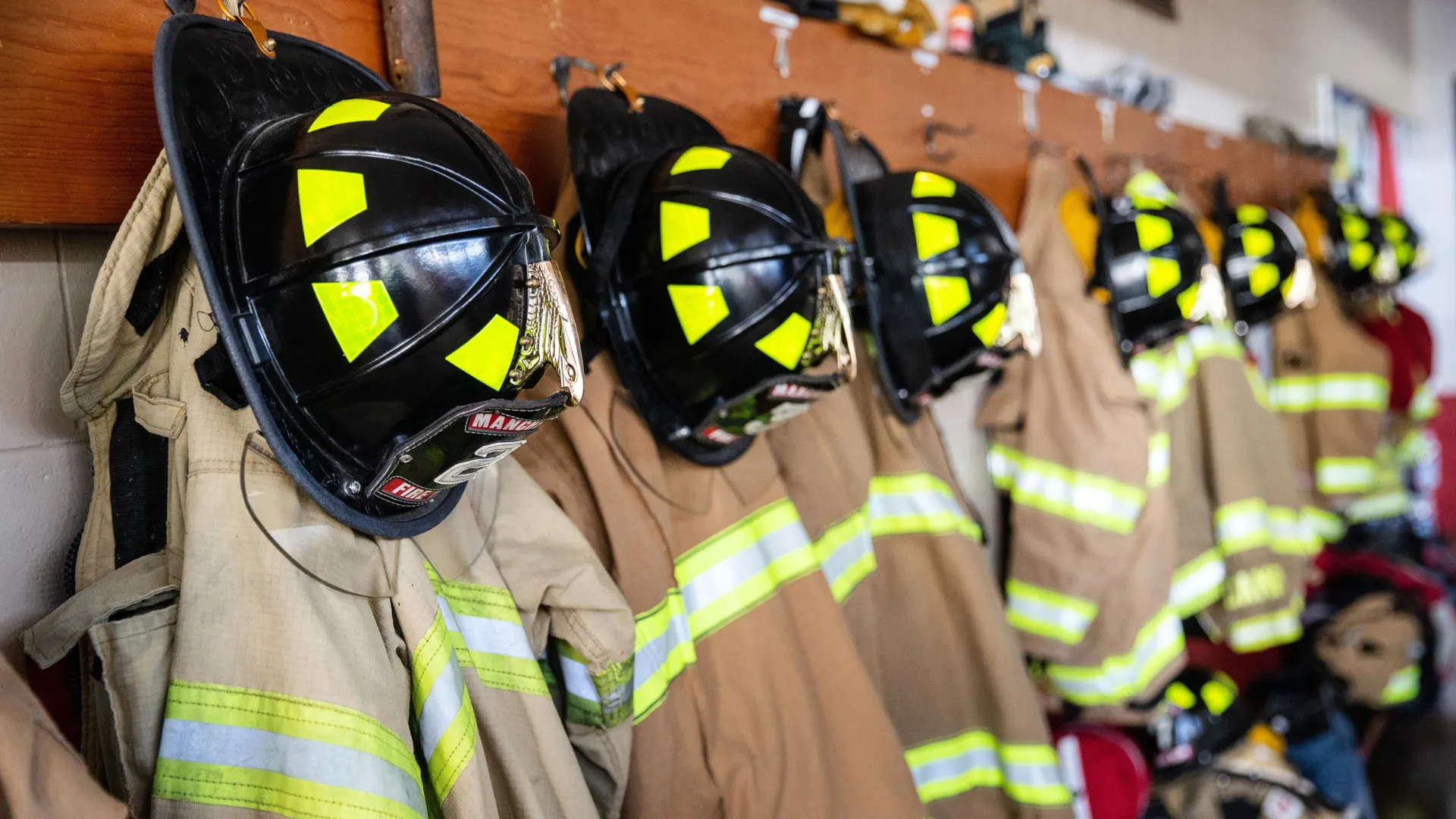
The intricate design of structural firefighter turnout gear, engineered for protection in built environments, comprises three critical layers. An outer shell, inherently resistant to flames, is complemented by a middle moisture barrier that serves a dual purpose: preventing the ingress of harmful microbes while permitting essential airflow. Beneath these lies an inner lining meticulously crafted to assist in regulating the wearer’s body temperature during strenuous activities. To ensure these garments meet the rigorous safety benchmarks established by the National Fire Protection Association, manufacturers apply specific chemical treatments. Professor Heather Stapleton, the study’s lead author and a distinguished professor at Duke University’s Nicholas School of the Environment, explained that these treatments are crucial for adherence to stringent safety protocols.
For several years, the fire service community has voiced growing apprehension regarding the incorporation of per- and polyfluoroalkyl substances (PFAS) into turnout gear. These chemicals are valued for their capacity to repel both oil and water, and they also contribute to flame resistance. A substantial body of research, encompassing both human and animal subjects, has established a correlation between exposure to PFAS and a spectrum of adverse health outcomes, including an increased risk of certain types of cancer. While a direct causal link between PFAS-treated turnout gear and specific health conditions in firefighters has yet to be definitively established, manufacturers have begun a discernible shift away from these compounds. Furthermore, legislative actions are underway in multiple states, with bans on the procurement of PFAS-treated turnout gear slated to take effect in 2027.
As the transition away from PFAS gains momentum, scientific scrutiny has naturally turned to the alternative substances being employed. A significant challenge arises from the fact that manufacturers are not typically mandated to disclose the specific chemical compositions of the treatments applied to turnout gear. Professor Stapleton elaborated on the impetus for this particular research, noting a prevailing "rumor that one of the turnout gear manufacturers might be using brominated flame retardants in the non-PFAS treated textiles." This unsubstantiated claim, coupled with the known toxicity profiles of some brominated flame retardants, led Professor Stapleton to proactively request a sample of the implicated gear for independent laboratory analysis.
Brominated flame retardants are a class of chemicals frequently incorporated into fabrics and a wide array of consumer products with the primary objective of diminishing their flammability. However, scientific literature has repeatedly highlighted potential health consequences associated with exposure to these substances, including links to various forms of cancer, disruptions in thyroid function, and adverse effects on cognitive development. The initial findings from Professor Stapleton’s preliminary testing indeed confirmed the presence of brominated flame retardants within the analyzed turnout gear sample. This pivotal discovery paved the way for a more comprehensive investigation, undertaken in partnership with researchers from North Carolina State University’s Wilson College of Textiles and the International Association of Fire Fighters. The overarching objective of this collaborative effort was to ascertain the prevalence of both PFAS and brominated flame retardants in turnout gear manufactured across different timeframes.
The research team meticulously examined nine sets of used turnout gear, dating from production years between 2013 and 2020, alongside three newly manufactured sets from 2024 that were explicitly marketed as free from PFAS treatments. Employing two distinct analytical methodologies, the scientists subjected each layer of the protective ensembles to rigorous testing for the presence of both PFAS and brominated flame retardants. This dual-pronged analytical approach enabled the researchers to quantify not only the total chemical load but also the "extractable" portions – those compounds likely to migrate from the fabric during use. Professor Stapleton emphasized the critical importance of this distinction: "We wanted to know which chemicals were intentionally applied during manufacturing, and we wanted to know what was likely to leach out over time, which could raise the risk of exposure through skin absorption or inhalation."
As anticipated, PFAS were detected in all turnout gear samples produced between 2013 and 2020. In stark contrast, the 2024 gear exhibited only minimal or undetectable levels of extractable PFAS, aligning with manufacturer claims of its non-treated status; the minuscule quantities identified were likely attributed to environmental contamination acquired during the gear’s service life. More surprisingly, however, every single set of turnout gear subjected to analysis also contained brominated flame retardants, with the extractable levels of these compounds generally exceeding those measured for PFAS.
The investigation yielded a particularly noteworthy finding: the highest concentrations of extractable brominated flame retardants were identified in the gear explicitly marketed as PFAS-free, with a notable accumulation within the moisture barrier layer. Professor Stapleton posited that this pattern strongly suggests manufacturers have intentionally incorporated brominated flame retardants to fulfill flammability mandates, likely serving as a substitute for PFAS compounds previously utilized in this specific component of the gear. Among the various brominated flame retardants identified, decabromodiphenyl ethane (DBDPE) was detected at the most significant extractable levels. While direct epidemiological studies on the health effects of DBDPE exposure in the U.S. are currently limited, the research team highlighted a 2019 study conducted among workers at a chemical manufacturing facility in China. This earlier research indicated a correlation between DBDPE exposure and alterations in thyroid hormone levels, alongside observable signs of thyroid disease. Professor Stapleton expressed her considerable surprise at the use of DBDPE in firefighter gear, remarking, "It has similar properties as a toxic chemical called decaBDE that has been largely phased out globally, raising questions about its safety."
The distribution of brominated flame retardants within older turnout gear (2013-2020) showed a tendency for higher extractable levels in the outer shell compared to the moisture barrier or inner lining. Professor Stapleton attributed this distribution pattern to the likely accumulation of airborne chemicals from smoke and soot encountered during firefighting operations, noting that "When building materials burn, they can release brominated flame retardants into the air that stick to gear and don’t wash out very well." Concurrently, the presence of these chemicals within the internal layers of the gear suggests that some manufacturers may have been incorporating brominated flame retardants into their turnout gear treatments for years, even prior to the widespread push to phase out PFAS.
While the precise levels of firefighter exposure to these chemicals and their long-term health consequences remain subjects for future research, the current study furnishes invaluable data for fire departments as they navigate the complex decisions surrounding protective equipment. Co-author R. Bryan Ormond, an associate professor at NC State’s Wilson College of Textiles and director of its Milliken Textile Protection and Comfort Center, emphasized the significant investment involved, stating, "Turnout gear is really expensive — one set costs thousands of dollars — and firefighters often use these garments for many years. Fire departments must consider both the financial and personal safety costs of keeping or replacing gear." Professor Stapleton pointed to the emergence of some manufacturers offering turnout gear that explicitly avoids both PFAS and brominated flame retardants, advocating for greater transparency from the industry. She urged fire departments to actively demand clearer disclosures regarding the chemical treatments employed in their protective ensembles. Concluding with a powerful statement on the risks faced by these public servants, Professor Stapleton, who also leads a study on cancer incidence in firefighters, remarked, "We know firefighters receive higher exposure to multiple chemicals from all the hazards they face during their duty, and they shouldn’t have to worry about receiving additional chemical exposures from their gear. These first responders are a critically important component of our public safety and deserve to be respected and protected."
This research initiative received financial backing from the North Carolina Collaboratory at the University of North Carolina at Chapel Hill, with funding allocated by the North Carolina General Assembly. The study’s lead author also expressed gratitude to Michael and Annie Falk for their instrumental role in establishing the Falk Exposomics Laboratory.

Related News