As individuals progress into their fifth decade and beyond, the pursuit of robust physical health often shifts towards maintaining functional independence, enhancing mobility, and mitigating age-related decline. A crucial aspect of this journey involves fortifying the lower body, which serves as the foundation for balance, locomotion, and overall vitality. The natural aging process frequently brings with it sarcopenia, the gradual loss of muscle mass and strength, alongside diminished bone density and reduced joint flexibility. These changes can collectively compromise stability, increase the risk of falls, and make everyday tasks, such as climbing stairs or rising from a chair, progressively more challenging. Fortunately, a targeted, consistent approach to lower body strengthening, even for those new to exercise, can significantly counteract these effects, promoting not only a more toned physique but also profound improvements in quality of life, confidence, and long-term well-being. This article outlines an accessible, daily exercise protocol designed specifically for mature adults, emphasizing safety, efficacy, and holistic development of the legs and hips.
Effective lower body training for individuals over fifty prioritizes intelligent movement patterns over sheer intensity. The objective is to cultivate muscle strength and endurance in a manner that supports joint health, optimizes balance, and ensures comfortable, confident movement throughout daily activities. This necessitates selecting exercises that facilitate a full range of motion, introduce controlled stability challenges, and engage multiple large muscle groups before moving to more isolated, refining movements. A comprehensive strategy also recognizes the importance of multi-planar movement, meaning incorporating exercises that move the body not just forward and backward, but also side-to-side and rotationally. Neglecting lateral movements, for instance, can leave significant gaps in strength and stability, impacting how the legs perform during common actions like walking on uneven surfaces or quickly stepping aside. By integrating varied movement patterns and specific isolation exercises, one can achieve a more balanced muscular development, which translates into enhanced functional capacity and a more aesthetically pleasing leg appearance. The following routine is structured to build from foundational, compound movements to more focused, refining exercises, all while remaining gentle on the joints and suitable for daily implementation by beginners.
Bodyweight Squats: The Foundation of Lower Body Power
The bodyweight squat stands as a cornerstone exercise for developing foundational lower body strength and improving overall leg definition. This compound movement simultaneously engages the hips, thighs, and core, establishing correct movement mechanics that are vital for everyday actions like standing up, sitting down, and navigating stairs. For individuals embarking on their fitness journey after 50, consistent squat practice significantly enhances knee stability, improves hip mobility, and builds the confidence required for independent movement. Furthermore, the dynamic nature of squats stimulates circulation throughout the legs, contributing to firmer muscle tone and an improved overall appearance. Executing squats daily, without added external load, provides a potent stimulus for muscle growth and coordination without imposing undue stress on the joints.
- Muscles Engaged: Primarily targets the quadriceps (front of thighs), gluteal muscles (buttocks), and hamstrings (back of thighs). Secondary engagement includes the core stabilizers for maintaining an upright posture.
- Execution Guide: Begin with feet approximately shoulder-width apart, toes pointing slightly outward. Maintain an upright posture, keeping your chest lifted and shoulders back. Initiate the movement by pushing your hips backward as if you are attempting to sit into a chair, simultaneously bending your knees. Descend until your thighs are roughly parallel to the floor, or as far as comfort and mobility allow without compromising form. Ensure your knees track in line with your toes and do not collapse inward. Push through your heels and midfoot to return to the starting standing position, consciously engaging your glutes at the top.
- Prescribed Volume: Aim for 3 sets of 10 to 15 repetitions. Allow for a brief recovery period of 45 seconds between each set.
- Adaptations/Progression: For added support, consider chair squats, where you tap a chair with your glutes before standing. As strength progresses, goblet squats (holding a light dumbbell at your chest) or box squats (descending to a box of a specific height) can introduce a controlled challenge.
- Key Form Insight: During the ascent, visualize pressing your feet firmly into the floor as if you are trying to spread it apart, which helps activate the glutes and outer thighs more effectively.
Dumbbell Romanian Deadlifts (RDLs): Strengthening the Posterior Chain
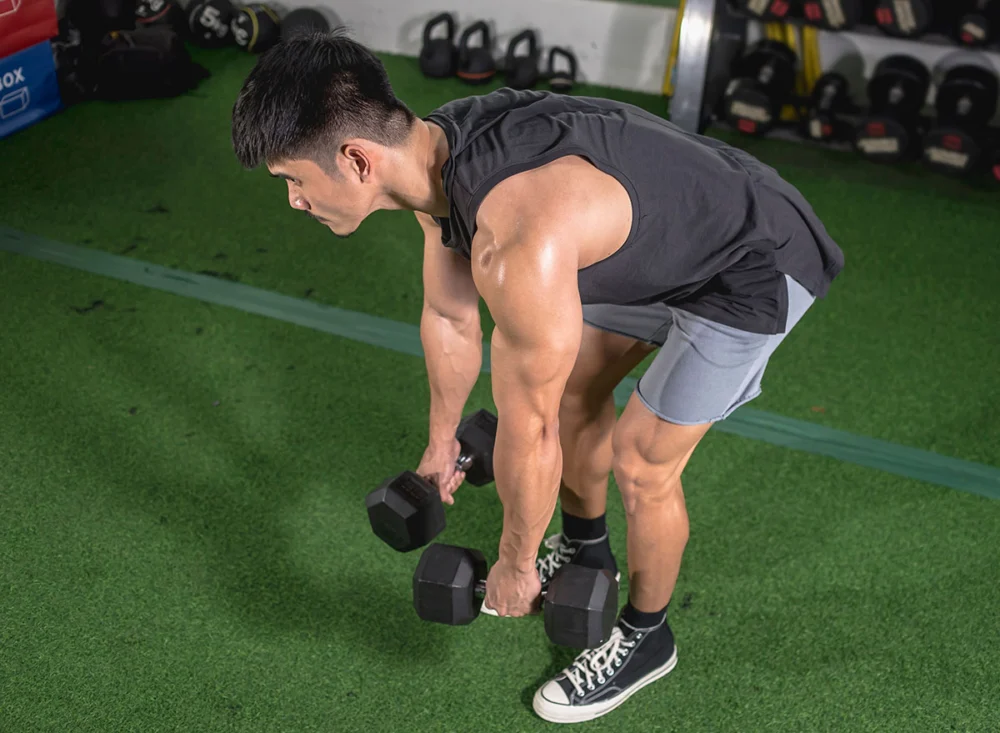
The Romanian Deadlift, particularly when performed with light dumbbells, is an indispensable exercise for fortifying the posterior chain—the muscles along the back of the body, specifically the hamstrings and glutes. This region is often underdeveloped in many beginners, yet its strength is paramount for balanced leg development, robust knee protection, and lower back health. The RDL teaches a fundamental hip-hinging movement pattern, which translates directly into safer mechanics for bending, lifting objects, and improving walking efficiency. Over time, consistent practice of RDLs contributes to a smoother, more defined transition from the glutes to the hamstrings, enhancing the overall contoured appearance of the legs. Utilizing light dumbbells ensures the movement remains controlled, accessible, and focuses on muscle activation rather than heavy lifting.
- Muscles Engaged: Primarily targets the hamstrings and gluteal muscles. Secondary engagement includes the erector spinae (lower back muscles) and core stabilizers.
- Execution Guide: Stand tall with your feet hip-width apart, holding a light dumbbell in each hand, palms facing your thighs. Maintain a slight bend in your knees throughout the entire movement, avoiding locking them out. Initiate the movement by pushing your hips backward, allowing the dumbbells to descend along the front of your thighs. Keep your back straight, chest up, and gaze slightly forward to maintain a neutral spine. Focus on feeling a stretch in your hamstrings as you lower the weights. Stop the descent before your lower back begins to round, typically when the dumbbells are around mid-shin level or slightly lower. Engage your glutes and hamstrings to reverse the movement, pulling the weights back up to the starting position by driving your hips forward.
- Prescribed Volume: Perform 3 sets of 8 to 12 repetitions. Rest for 60 seconds between each set.
- Adaptations/Progression: To increase the challenge, try a single dumbbell RDL (holding one dumbbell with both hands) or a staggered stance RDL, which introduces an element of unilateral work. Kettlebell RDLs offer a slightly different feel and grip.
- Key Form Insight: Concentrate on maintaining a long, straight spine throughout the movement. The hinge should originate from the hips, not the lower back, ensuring the stretch is felt in the hamstrings rather than strain in the lumbar region.
Glute Bridge: Isolating Hip Strength and Stability
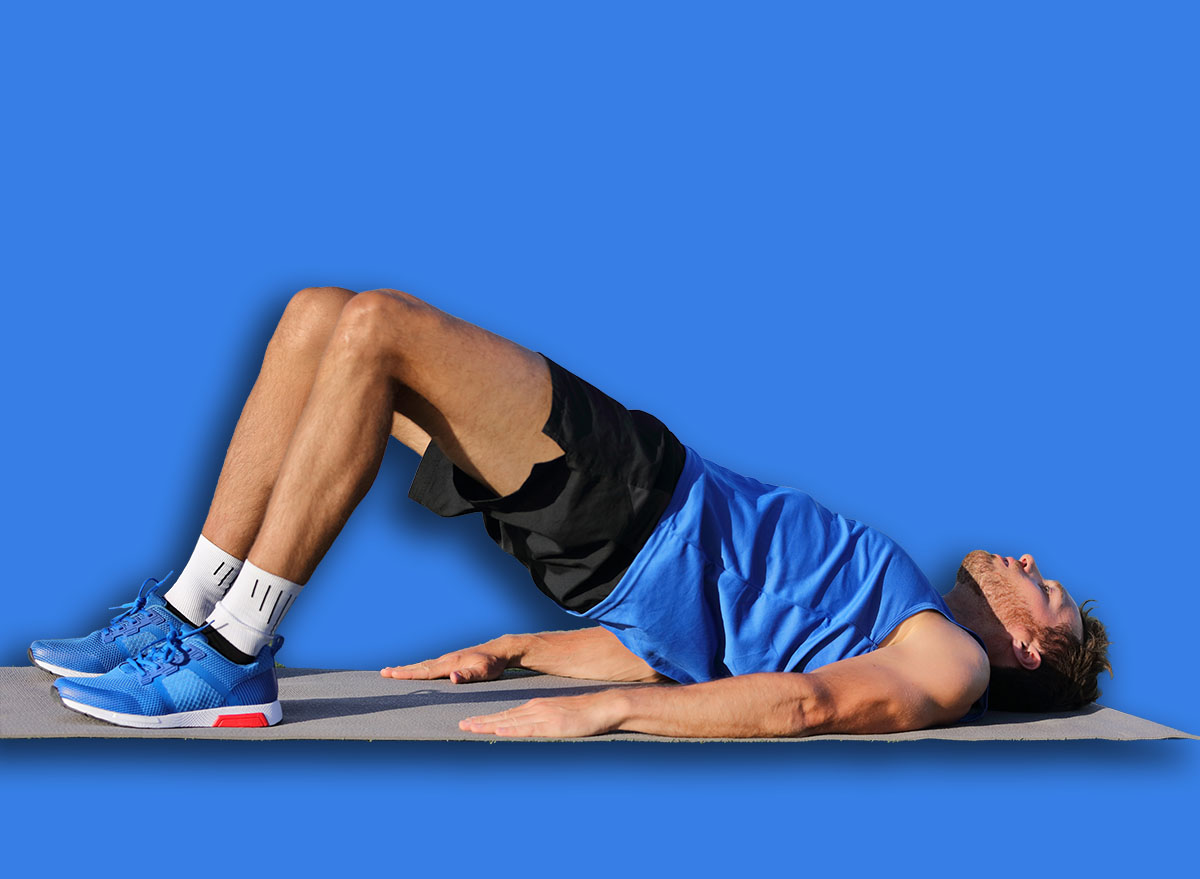
The glute bridge is an excellent exercise for directly activating and strengthening the gluteal muscles while minimizing stress on the knees and spine. This movement is particularly beneficial for mature adults, as prolonged sitting and reduced activity can lead to dormant or weakened glutes. Strong glutes are instrumental in improving overall leg tone, correcting posture, and enhancing the efficiency and power of your gait. Furthermore, the glute bridge actively supports lower back comfort by teaching proper hip extension and reinforcing the synergistic relationship between the glutes and the lumbar region. For beginners, this exercise offers an empowering way to build core and hip strength without the intimidation factor of more complex movements.
- Muscles Engaged: Primarily targets the gluteal muscles (maximus, medius, minimus) and hamstrings. Also engages the core stabilizers and contributes to lower back support.
- Execution Guide: Lie on your back on the floor, bending your knees so your feet are flat on the ground, hip-width apart, and positioned a comfortable distance from your glutes. Place your arms at your sides with palms down. Engage your core and glutes, then push through your heels to lift your hips off the floor until your body forms a straight line from your shoulders to your knees. Avoid arching your lower back excessively at the top; focus on squeezing your glutes. Hold this peak contraction for a brief moment before slowly lowering your hips back down to the starting position with control.
- Prescribed Volume: Complete 3 sets of 12 to 15 repetitions. Allow for a 45-second rest period between sets.
- Adaptations/Progression: To increase the difficulty, try a paused glute bridge (holding the top position for several seconds), a single-leg bridge (lifting one leg off the floor), or an elevated feet bridge (placing your feet on a low step or bench).
- Key Form Insight: Actively squeeze your glutes at the apex of the lift, ensuring that the movement is driven by your hips and not by overarching your lower back, which could lead to discomfort.
Cossack Squats: Embracing Lateral Movement for Comprehensive Strength
Cossack squats introduce a critical element of lateral movement into a leg training routine, an aspect often overlooked but vital for comprehensive leg tone, hip mobility, and joint resilience. This dynamic exercise specifically targets and strengthens the inner thigh muscles (adductors) while significantly improving flexibility and range of motion in the hips, and enhancing overall balance. Developing strength in the side-to-side plane is crucial for reducing stiffness, preventing injuries from unexpected movements, and supporting smoother, more confident walking patterns. For beginners, executing Cossack squats slowly and deliberately allows for greater control, building confidence in a new movement dimension. This exercise provides a unique stimulus that traditional linear movements cannot replicate, leading to more rounded muscular development and improved functional adaptability.
- Muscles Engaged: Primarily targets the inner thighs (adductors), gluteal muscles, and quadriceps. Also significantly improves hip mobility and engagement of core stabilizers for balance.
- Execution Guide: Begin with a wide stance, feet much wider than shoulder-width apart, with toes pointed slightly outward. Shift your weight to one side, bending that knee deeply while keeping the other leg straight and extended, with that foot potentially lifting its heel or pointing its toes upwards. Keep your chest upright and your back straight as you descend into the squat on one side, ensuring the bending knee tracks over the toes. Go as deep as your mobility allows without pain. Push through the heel of the bent leg to return to the starting wide stance, then repeat the movement on the opposite side. Alternatively, you can stay on one side for all reps before switching.
- Prescribed Volume: Perform 2 to 3 sets of 6 to 8 repetitions per side. Rest for 60 seconds between each set.
- Adaptations/Progression: For those needing assistance, an assisted Cossack squat can be performed by holding onto a sturdy object for support. Reducing the range of motion (partial range Cossack) or performing lateral squats (less depth, more focus on side-to-side transfer) are also viable variations.
- Key Form Insight: Execute the movement with deliberate slowness and remain within a comfortable, pain-free range of motion. Focus on control and stability rather than depth, allowing your mobility to gradually improve over time.
Standing Calf Raises: Sculpting the Lower Legs and Enhancing Ankle Health
Standing calf raises are a simple yet highly effective exercise for shaping the lower legs, strengthening the ankles, and improving overall circulation in the calves. Strong calf muscles are indispensable for maintaining balance, providing propulsion during walking, and reducing fatigue during prolonged standing. This straightforward movement significantly enhances muscle tone in an area where many individuals first notice a loss of firmness or definition. Incorporating calf raises into a daily routine builds ankle resilience, which is crucial for fall prevention, and contributes to a consistently firm and defined appearance in the lower legs. They serve as an excellent finishing exercise, providing targeted isolation for complete lower body development.
- Muscles Engaged: Primarily targets the gastrocnemius and soleus (the two main calf muscles). Also engages ankle stabilizers for improved balance.
- Execution Guide: Stand tall with your feet hip-width apart, holding onto a wall or sturdy object for balance if needed. Slowly raise yourself up onto the balls of your feet, lifting your heels as high as possible. Focus on squeezing your calf muscles at the peak of the movement. Hold this elevated position briefly, then with controlled deliberate motion, slowly lower your heels back down past the starting position, allowing for a gentle stretch in the calves.
- Prescribed Volume: Complete 3 sets of 12 to 20 repetitions. Rest for 30 seconds between each set.
- Adaptations/Progression: For increased challenge, try single-leg calf raises. Seated calf raises target the soleus muscle more directly. Slow tempo raises (taking several seconds for the eccentric lowering phase) can maximize muscle engagement and time under tension.
- Key Form Insight: The lowering phase (eccentric contraction) is just as important as the lifting phase. Control the descent to maximize muscle engagement and promote greater strength gains.
Beyond the Exercises: Holistic Strategies for Leg Vitality
While these five exercises form an excellent foundation, maximizing their benefits requires a holistic approach to fitness and well-being, especially for mature adults. Consistency is paramount; daily, gentle effort over time yields far superior results compared to sporadic, intense bursts. Listening to your body is crucial—distinguish between muscle fatigue and joint pain. Never push through sharp or persistent pain. Gradual progressive overload is key for continued improvement; once an exercise becomes easy, subtly increase the challenge by adding more repetitions, slowing down the movement, or introducing light external resistance (like small dumbbells). Nutrition and hydration play a vital role; adequate protein intake supports muscle repair and growth, while proper hydration maintains joint lubrication and overall cellular function. Prioritizing recovery through sufficient sleep and allowing for rest days for specific muscle groups ensures muscles can rebuild stronger. Finally, consider consulting a healthcare professional or certified personal trainer before starting any new exercise program, especially if you have pre-existing health conditions, to ensure the routine is appropriate and safe for your individual needs.
By embracing this comprehensive approach, individuals over fifty can transcend common misconceptions about age-related physical decline. Consistent, intentional lower body training is not merely about aesthetic enhancement; it is a profound investment in functional independence, improved quality of life, and the sustained ability to engage with the world confidently and comfortably for years to come. The journey of building strength and vitality is a marathon, not a sprint, and with patience and persistence, the rewards are truly transformative.
About the Author