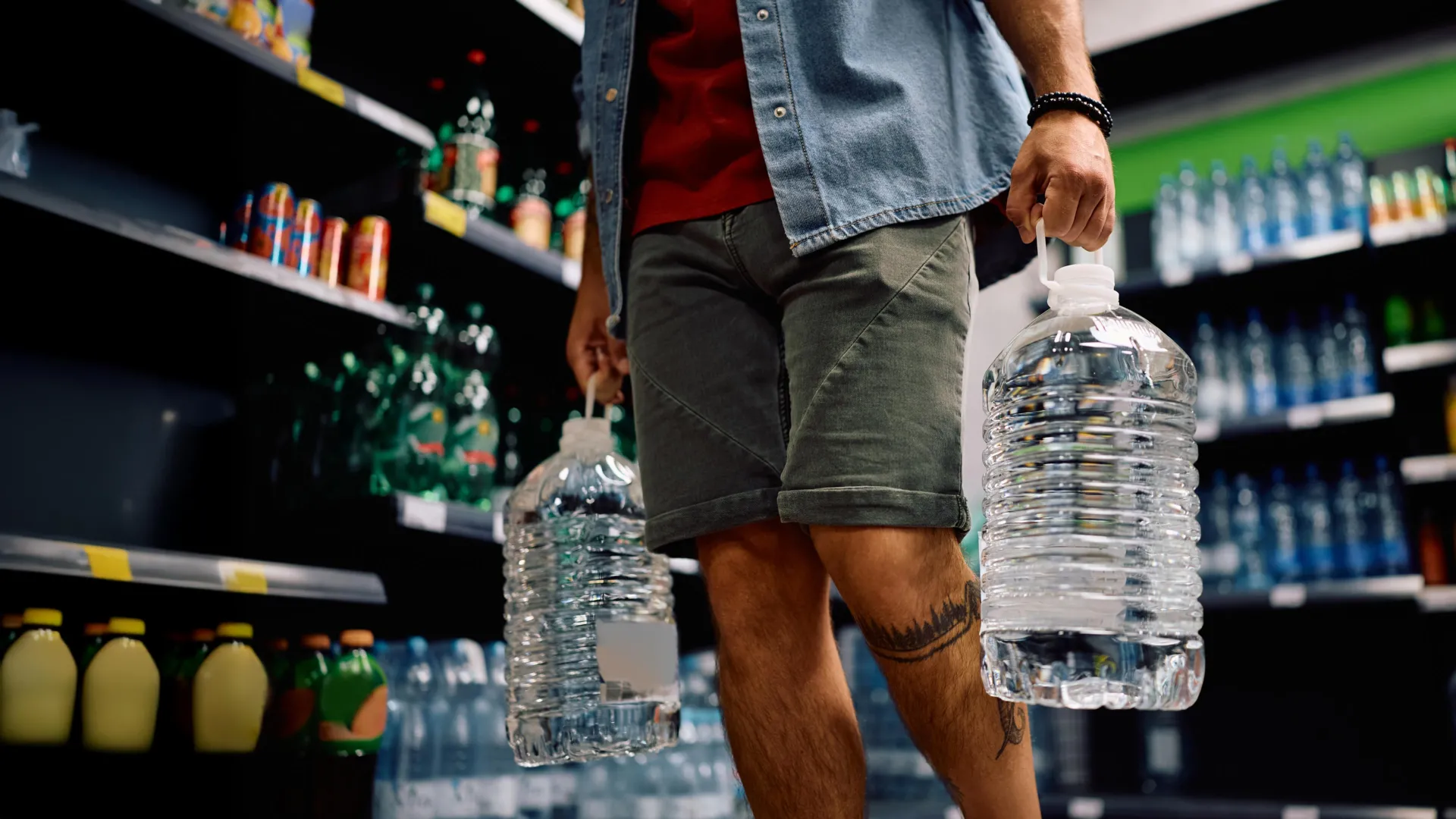
A groundbreaking investigation conducted in Guatemala’s Western Highlands by researchers affiliated with Washington State University has unveiled a disquieting disparity between public perception of drinking water safety and the actual microbial presence detected in various sources. The study, published in the esteemed Journal of Water and Health, meticulously examined a range of water supplies, revealing that a commonly held belief in the inherent safety of bottled water, particularly large refillable jugs, is largely unfounded. Laboratory analyses demonstrated that these ostensibly clean water provisions were, in fact, the most probable carriers of coliform bacteria, a potent indicator of fecal contamination.
This research underscores a critical chasm between public confidence in water purity and the scientific reality, a disconnect that carries profound implications for public health initiatives. Dr. Brooke Ramay, the lead author and an assistant research professor at the WSU College of Veterinary Medicine’s Paul G. Allen School for Global Health, articulated the gravity of this finding, emphasizing that such misalignments can lead to a dangerous complacency, leaving communities vulnerable to waterborne illnesses. The study’s findings are particularly salient given the persistent global challenge of ensuring access to safe drinking water. Globally, an estimated four billion individuals grapple with inadequate access to safely managed water resources, with fecal contamination being a primary driver of millions of annual diarrheal disease cases, disproportionately affecting young children. Furthermore, the nexus between contaminated water and the escalating spread of antimicrobial-resistant bacteria is an area of growing concern for global health organizations.
Dr. Ramay elaborated on the crucial role of public perception in shaping protective behaviors. "Understanding how people view water safety is key to improving public health," she stated. "When people believe their water is safe, they don’t take extra precautions, but when they see a risk, they change their behavior." This psychological dimension highlights the necessity of accurate public health messaging that aligns with scientific findings to encourage appropriate water treatment and handling practices.
The research methodology involved a comprehensive survey of sixty households, evenly distributed between urban and rural settings within the Western Highlands. Alongside the surveys, water samples were systematically collected from a diverse array of sources, including bottled water, piped municipal water, well water, spring water, and filtered water. These samples underwent rigorous laboratory analysis to detect the presence of coliform bacteria, Escherichia coli (E. coli), and critically, antibiotic-resistant organisms. Among the antibiotic-resistant pathogens investigated were extended-spectrum beta-lactamase-producing (ESBL) bacteria and carbapenem-resistant Enterobacterales (CRE). These formidable bacteria possess the ability to withstand many common antibiotic treatments, rendering infections they cause exceptionally challenging to manage. While ESBL and CRE bacteria can reside harmlessly within the human gut, their opportunistic invasion of the urinary tract or bloodstream can precipitate severe and life-threatening illnesses.
The study’s results regarding bottled water were particularly striking. Despite its widespread reputation for purity, bottled water emerged as the most compromised source, exhibiting coliform contamination six times more frequently than other examined water sources. Merely 17% of the analyzed bottled water samples adhered to the stringent safety standards established by the World Health Organization for potable water. In Guatemala, bottled water frequently serves as the principal source of drinking water for numerous households. The prevalent model involves large jugs that are routinely refilled at local purification facilities or neighborhood refill stations. These operations typically involve treating the water, sealing the containers, and then distributing them to both residential and commercial consumers.
Dr. Ramay offered a critical insight into the potential pathways of contamination, suggesting that the issue often lies not with the initial bottling process itself, but with the subsequent handling and storage. "The problem isn’t usually with how the water is bottled — it’s what happens afterward," she explained. "These jugs can be stored improperly, and dispensers aren’t cleaned regularly, and we think this can create ideal conditions for bacteria to grow." This points to a need for enhanced hygiene practices throughout the distribution and consumption chain, extending beyond the point of initial treatment.
The pervasive presence of microbial contaminants was not confined to bottled water alone. Across the entirety of sampled water sources, coliform bacteria were identified in an alarming 90% of samples. E. coli was detected in 55% of samples, and ESBL-producing bacteria were found in 30%. While CRE bacteria were encountered less frequently, their presence was nonetheless documented in certain household piped water samples. The implications of these findings are amplified by the fact that these microorganisms can contribute to the proliferation of antibiotic resistance even in the absence of immediate symptomatic illness. This silent spread of resistance genes poses a long-term threat to public health, potentially rendering future infections more difficult to treat.
In a stark contrast to the perceived safety of bottled water, water drawn directly from protected municipal wells exhibited the lowest levels of contamination. This finding is particularly noteworthy as residents tended to rank these sources lower in their perceived safety. These community wells, characterized by their sealed infrastructure and chlorination processes, demonstrated no detectable coliform contamination, nor were E. coli, ESBL, or CRE bacteria found in any of the samples. This suggests that well-managed and properly maintained municipal water systems can indeed provide a safe water supply.
However, the integrity of the water supply significantly deteriorated once it entered household distribution networks. Following its piped delivery into homes, contamination levels escalated dramatically. Over 65% of household samples subsequently tested positive for coliform bacteria, while 28% harbored E. coli. Furthermore, 11% of these domestic samples contained ESBL-producing bacteria, and another 11% were found to contain CRE. This illustrates a critical vulnerability in the final delivery stage of water to consumers.
The study further illuminated the profound influence of cultural beliefs and perceptions on everyday practices related to water consumption. Individuals who express strong confidence in the safety of their water source are demonstrably less inclined to undertake additional purification steps, such as boiling. Conversely, those who rely on bottled water often neglect routine cleaning of dispensers, a practice that can inadvertently create a breeding ground for microbial growth. Dr. Ramay concluded by emphasizing this behavioral aspect: "Our results suggest that beliefs about water safety may actually contribute to contamination because people don’t take the same hygienic steps with sources they trust that they might with other less trusted sources." This paradoxical outcome highlights the complex interplay between trust, behavior, and public health outcomes, underscoring the need for targeted educational interventions that bridge the gap between perception and scientific reality.
About the Author