Nations worldwide are intensifying their collaborative efforts to construct a robust and equitable framework for addressing future global health crises. Following a recent round of comprehensive discussions, Member States of the World Health Organization (WHO) have underscored a profound commitment to expedite negotiations on the groundbreaking Pathogen Access and Benefit Sharing (PABS) system, signaling a critical push towards enhanced global pandemic preparedness. The urgency reflects a collective realization that the current international landscape for managing infectious disease outbreaks is inadequate, necessitating a legally binding mechanism to ensure rapid, fair, and transparent responses.
The PABS system, envisioned as a pivotal annex to a broader WHO Pandemic Agreement, aims to establish a standardized global platform for the swift sharing of novel pathogens and their genetic sequence information. Crucially, it also seeks to ensure that the benefits derived from the utilization of these biological materials – encompassing everything from life-saving vaccines and therapeutics to diagnostic tools and manufacturing technologies – are distributed equitably among all countries. This initiative stems directly from the stark lessons learned during the COVID-19 pandemic, where vast disparities in access to essential medical countermeasures highlighted severe systemic inequities and the urgent need for a more coordinated international approach.
Delegates from WHO Member States recently concluded the fourth formal session of the Intergovernmental Working Group (IGWG) on the WHO Pandemic Agreement. This intensive gathering took place in Geneva from December 1st to 5th, 2025, where negotiators grappled with complex provisions intended to define the operational parameters of the PABS system. In a significant move demonstrating renewed vigor and a shared desire to bridge existing divergences, participating nations unanimously resolved to extend this fourth round of negotiations. They agreed to reconvene for an expedited continuation of deliberations from January 20th to 22nd, 2026. This decision to shorten the break between sessions underscores the palpable sense of responsibility felt by global leaders to finalize a crucial agreement before the next World Health Assembly.
The mandate for establishing the IGWG originated from the World Health Assembly itself, the WHO’s supreme decision-making body. Its primary directive was to draft and negotiate a comprehensive WHO Pandemic Agreement, with the PABS annex identified as a cornerstone of this larger accord. The intention behind the PABS platform is to create a unified global mechanism, replacing ad-hoc arrangements, that can facilitate the rapid exchange of critical biological samples and their genetic blueprints. Such a system is designed to trigger an immediate, coordinated global response upon the emergence of a new pathogen, enabling scientists worldwide to swiftly develop diagnostics, treatments, and vaccines, thereby dramatically shortening the response time to potential pandemics.
The concept of "access" within the PABS framework refers to the timely provision of pathogen samples and their genetic sequence data (GSD) by countries where outbreaks occur. This rapid sharing is fundamental for scientific research, risk assessment, and the development of countermeasures. Without immediate access to these critical biological resources, the global scientific community faces significant delays in understanding new threats and devising effective interventions. The system aims to standardize protocols for such sharing, overcoming previous hurdles related to national sovereignty, intellectual property concerns, and logistical complexities.
Equally vital is the principle of "benefit sharing." This element seeks to rectify historical imbalances where countries providing pathogen samples, often low-income nations, have not always received fair access to the resulting medical products or the technological know-how required for their production. The benefits envisioned under PABS are multifaceted and include, but are not limited to:
- Equitable Access to Products: Guaranteeing that vaccines, therapeutics, and diagnostics developed from shared pathogens are made available to all countries, particularly those most vulnerable, at affordable prices and in sufficient quantities.
- Technology Transfer: Facilitating the transfer of manufacturing capabilities and technical expertise to developing countries, enabling them to produce their own medical countermeasures.
- Capacity Building: Investing in research and development infrastructure, laboratory networks, and skilled human resources in low- and middle-income countries.
- Information and Data Sharing: Ensuring that all relevant scientific data and research findings are disseminated transparently and widely.
- Financial Contributions: Establishing mechanisms for financial support, potentially through a dedicated fund, to assist countries in pandemic preparedness and response efforts.
Achieving consensus on the intricate details of benefit sharing has proven to be one of the most challenging aspects of the negotiations. It requires reconciling diverse national interests, intellectual property rights, and varying economic capacities. However, the statements from key figures involved in the negotiations reflect a growing optimism that these hurdles can be overcome through persistent diplomacy and a commitment to global solidarity.
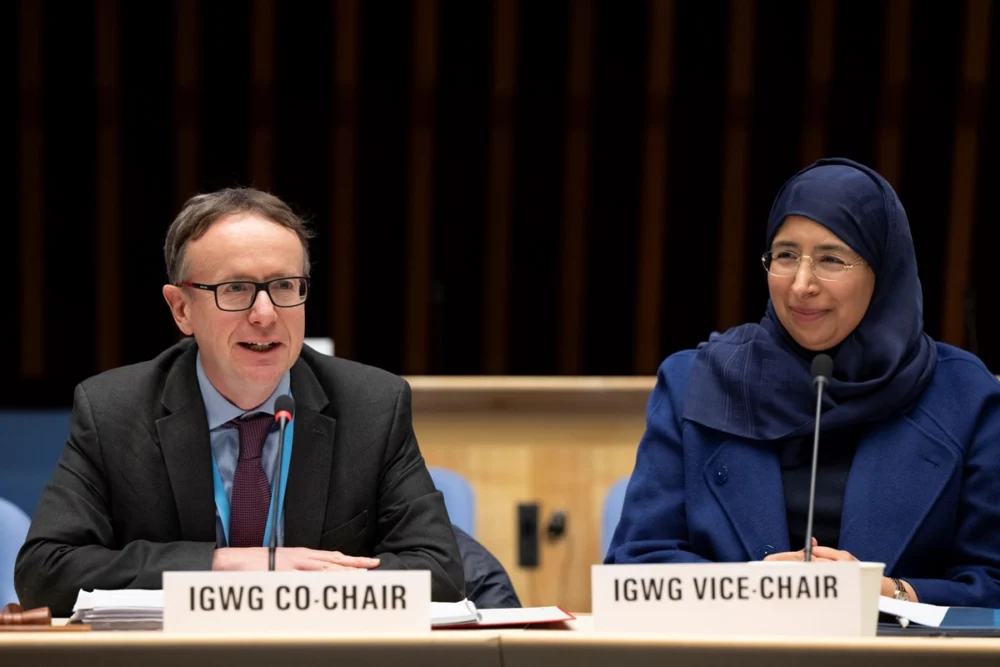
Mr. Matthew Harpur of the United Kingdom, who serves as a co-chair of the IGWG Bureau, expressed considerable encouragement regarding the advancements made thus far. He highlighted the significant progress in navigating the complexities of the PABS system, particularly as the negotiations have crossed their halfway point. Harpur commended Member States for demonstrating a genuine dedication to finding common ground and bridging ideological differences, reiterating the collective ambition to deliver a robust PABS system ready for adoption by the forthcoming World Health Assembly. His remarks underscore the spirit of constructive engagement prevalent among delegates, despite the inherent difficulties of drafting a universally acceptable international accord.
Echoing this sentiment, Ambassador Tovar da Silva Nunes of Brazil, the other co-chair of the IGWG Bureau, emphasized the unwavering commitment of WHO Member States to completing this vital undertaking. He pointed to substantial headway achieved in core areas such as access mechanisms, benefit-sharing modalities, and foundational governance structures, which together form a solid basis for further progress. Ambassador Nunes conveyed confidence in the ability of the working group to construct a strong and balanced PABS system that will genuinely serve the interests of all populations worldwide, fostering a sense of shared responsibility and collective benefit.
Dr. Tedros Adhanom Ghebreyesus, the Director-General of the WHO, reinforced the monumental significance of these negotiations, characterizing them as both a "generational opportunity" and a "generational responsibility." He extended his gratitude to the Member States and the IGWG Bureau for their dedicated efforts and their willingness to rise to the occasion. Dr. Tedros articulated a positive outlook for the concluding phase of the year, stating that the organization is well-positioned to forge consensus, finalize the draft agreement, and prepare it for formal adoption at the subsequent World Health Assembly. His comments project a clear vision of a world that is fundamentally better equipped to confront future pandemics, underpinned by a collaborative and equitable framework.
To ensure a comprehensive and inclusive drafting process, the IGWG Bureau initiated a series of informal dialogues with a diverse array of stakeholders prior to the fourth negotiating session. These critical discussions involved representatives from the private sector, academic institutions, specialized laboratories, and genetic sequence information databases. These dialogues are instrumental in gathering expert insights, addressing practical implementation challenges, and ensuring that the final agreement is pragmatic and effective. The Bureau has committed to continuing these focused discussions in the weeks leading up to the resumed January session, recognizing that broad stakeholder engagement is key to building a truly effective and sustainable global system. The fifth full IGWG meeting is already scheduled to follow from February 9th to 14th, 2026, further signaling the accelerated timeline.
The successful implementation of the PABS system, as an integral component of the broader WHO Pandemic Agreement, holds profound implications for global health security. It promises to transform the international response to emerging infectious diseases from a reactive, often fragmented approach into a proactive, coordinated, and equitable one. By establishing clear rules for pathogen sharing and benefit distribution, the world can move closer to a future where scientific breakthroughs are rapidly translated into public health interventions, and where no country is left behind in the race for life-saving tools. The intensified negotiations reflect a collective resolve to prevent a repeat of past inequities and to construct a more resilient and just global health architecture for generations to come.
About the Author