
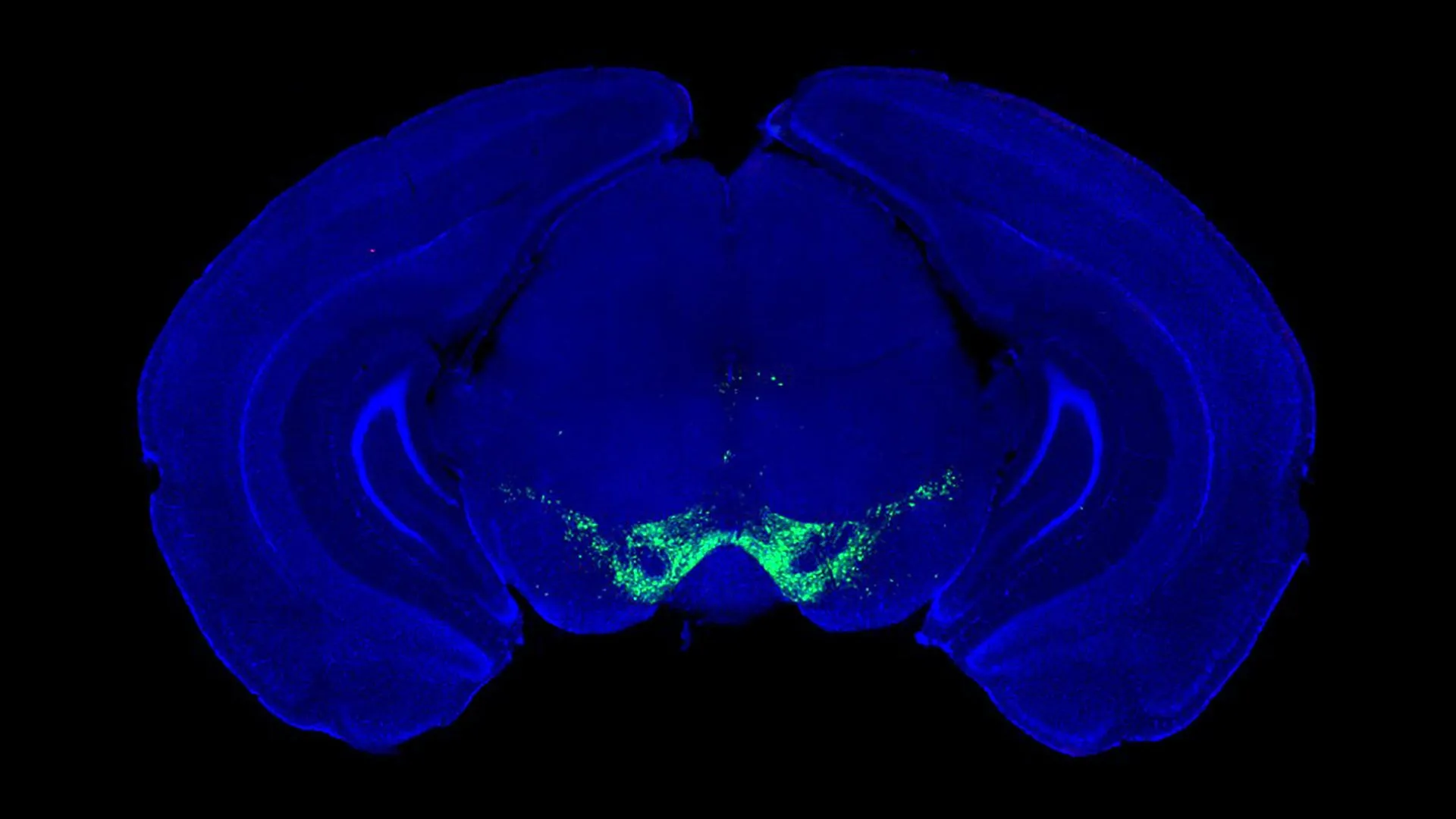
A paradigm shift is underway in the scientific community’s understanding of how dopamine orchestrates movement, with groundbreaking research from McGill University challenging a long-held tenet regarding its direct influence on motor speed and force. This reevaluation has profound implications for comprehending the pathophysiology of Parkinson’s disease and refining the strategies employed in its treatment. The study, meticulously detailed in the esteemed journal Nature Neuroscience, posits that dopamine’s primary function is not to dictate the intensity or velocity of an action, but rather to establish the fundamental biological prerequisites that enable movement to initiate and proceed.
Senior author Nicolas Tritsch, an Assistant Professor in McGill’s Department of Psychiatry and a researcher at the Douglas Research Centre, articulated the significance of these findings, stating, "Our results compel us to reconsider the established understanding of dopamine’s contribution to motor functions. The implication is that simply restoring dopamine to baseline levels might be sufficient to ameliorate motor deficits. This perspective could considerably simplify our conceptualization of Parkinson’s disease management." This perspective moves away from the notion of dopamine as a finely tuned regulator of motor output, suggesting instead a more foundational, enabling role.
Dopamine has historically been recognized as a critical neurotransmitter associated with motor vigor, a quality encompassing the ability to execute movements with both swiftness and power. In individuals afflicted with Parkinson’s disease, a progressive neurodegenerative condition, there is a gradual attrition of the specific neurons responsible for dopamine production. This depletion of dopaminergic neurons precipitates the characteristic motor symptoms of the disease, including bradykinesia (slowness of movement), resting tremors, and significant impairments in postural stability and gait.
Levodopa, the cornerstone pharmacological intervention for Parkinson’s disease, operates by augmenting dopamine levels within the brain, thereby aiming to restore motor function. However, the precise mechanisms underpinning its efficacy have remained somewhat enigmatic. In more recent years, advancements in neuroimaging and brain monitoring technologies have revealed transient, rapid increases, or "spikes," of dopamine occurring concurrently with motor activity. These observed rapid fluctuations led a significant portion of the research community to hypothesize that dopamine directly governed the vigor or intensity of movements. The present investigation directly confronts and debunks this prevailing assumption.
The experimental evidence suggests that dopamine does not function as a real-time controller, modulating movement speed or force on a moment-to-moment basis. Instead, its role appears to be more fundamental, akin to creating the necessary environmental conditions for movement to occur. Tritsch employed an insightful analogy to explain this revised perspective: "Rather than acting as a throttle that sets movement speed, dopamine appears to function more like engine oil. It’s essential for the system to run, but not the signal that determines how fast each action is executed." This analogy powerfully illustrates dopamine’s permissive and supportive role, rather than a directive one.
To rigorously test this hypothesis, the research team employed sophisticated experimental techniques in a murine model. They meticulously monitored the neural activity of mice as they engaged in a specific motor task: pressing a weighted lever. Utilizing an advanced optogenetic approach, researchers possessed the ability to precisely activate or deactivate dopamine-producing neurons during the performance of this task. The core prediction stemming from the "dopamine spike" theory was that if rapid dopamine surges were indeed the drivers of movement vigor, then manipulating dopamine levels at the precise moment of movement execution should demonstrably alter the speed or force with which the mice performed the action. However, the experimental results unequivocally demonstrated that altering dopamine activity during the act of movement itself had no discernible impact on the animals’ performance.
Further investigations delved into the mechanism of levodopa. The study’s findings indicated that levodopa exerts its therapeutic benefits by elevating the overall, sustained levels of dopamine in the brain. This contrasts with the earlier assumption that the drug’s efficacy stemmed from its ability to restore the fleeting dopamine bursts observed during motor activity. This distinction is crucial for understanding how current treatments work and for developing future interventions.
The implications of this research extend significantly towards the development of more precise and effective therapeutic strategies for Parkinson’s disease. In Canada alone, over 110,000 individuals are currently diagnosed with Parkinson’s disease, a figure projected to more than double by 2050, underscoring the escalating public health challenge posed by this condition, particularly in the context of an aging global population.
According to the McGill researchers, a more profound understanding of the fundamental mechanisms through which levodopa exerts its beneficial effects could pave the way for the creation of novel treatments. These future therapies might be designed to focus on maintaining a steady, optimal level of dopamine throughout the brain, rather than attempting to mimic or restore rapid, transient dopamine signals. This shift in focus could lead to more robust and sustained motor improvements.
Furthermore, these findings encourage a critical re-examination of existing and historical treatment modalities. Dopamine receptor agonists, a class of drugs that mimic the effects of dopamine, have historically offered therapeutic benefits for Parkinson’s patients. However, their widespread application has often been hampered by dose-limiting side effects, frequently attributed to their action across broad regions of the brain. The insights gained from this new research may empower scientists to design next-generation therapies that exhibit greater specificity, targeting neural circuits with greater precision and thereby minimizing off-target effects and improving the overall safety profile of treatments. This could lead to a more nuanced and personalized approach to managing the complex symptomatology of Parkinson’s disease.
The seminal work, titled "Subsecond dopamine fluctuations do not specify the vigor of ongoing actions," was authored by Haixin Liu and Nicolas Tritsch, among other collaborators, and has been formally published in Nature Neuroscience. The research received crucial financial backing from the Canada First Research Excellence Fund, administered through McGill University’s Healthy Brains, Healthy Lives initiative, as well as support from the Fonds de Recherche du Québec. This collaborative and well-funded endeavor underscores the commitment to advancing our understanding of neurodegenerative diseases and improving patient outcomes.
About the Author












