As global demographics shift, with an increasing proportion of the population living beyond their sixth decade, the discourse around healthy aging has intensified. The focus has moved beyond mere life expectancy to encompass healthspan – the duration of life spent in good health, free from chronic disease and disability. Central to this pursuit of an extended healthspan is the concept of functional fitness, a critical determinant of an individual’s ability to navigate daily life with confidence and independence. This article delves into a concise, yet comprehensive, bodyweight assessment designed to provide individuals over 60 with a practical snapshot of their functional capacity, highlighting areas of strength and potential improvement in just seven minutes.
Unlike traditional fitness metrics that often emphasize maximal strength or cardiovascular endurance, functional fitness for older adults prioritizes the fundamental movements essential for everyday living. This includes actions such as rising from a chair, ascending stairs, carrying groceries, maintaining balance, or simply standing comfortably for extended periods. These seemingly simple tasks require a complex interplay of muscular strength, endurance, coordination, balance, and proprioception – the body’s awareness of its position in space. As we age, physiological changes like sarcopenia (age-related muscle loss), decreased bone density, and reduced neuromuscular efficiency can compromise these abilities, increasing the risk of falls, limiting mobility, and ultimately diminishing quality of life. Therefore, assessments that directly reflect these functional capacities are invaluable.
Bodyweight exercises offer a uniquely effective and accessible avenue for both training and evaluating functional fitness, particularly for the senior population. They eliminate the need for specialized equipment, making them adaptable to almost any environment. More importantly, bodyweight movements inherently engage the body as an integrated system rather than isolating individual muscles. This systemic engagement mirrors the demands of real-world activities, where movements rarely occur in isolation. For instance, standing up doesn’t just involve leg strength; it requires core stability, balance, and coordination. By relying solely on one’s own body mass for resistance, these exercises expose any asymmetries or weaknesses in core stability, postural control, and strength endurance that might otherwise be masked by external support or momentum provided by machines. The immediate feedback from a bodyweight test is therefore remarkably honest, offering a clear indication of how well an individual’s muscles, joints, and nervous system collaborate to maintain control and stability.
The proposed seven-minute assessment focuses on three foundational isometric holds: the wall sit, the plank, and the glute bridge. Isometric exercises, which involve holding a static position, are particularly beneficial for building strength endurance and improving joint stability without the dynamic impact that can sometimes be challenging for older joints. This specific protocol is designed to challenge the major muscle groups responsible for lower body strength, core integrity, and hip function – all pillars of functional mobility. The entire sequence, including brief rest periods, is completed twice, totaling six work intervals that demand sustained focus and physical composure. Successfully completing this routine with good form signals a high level of physical resilience and control.
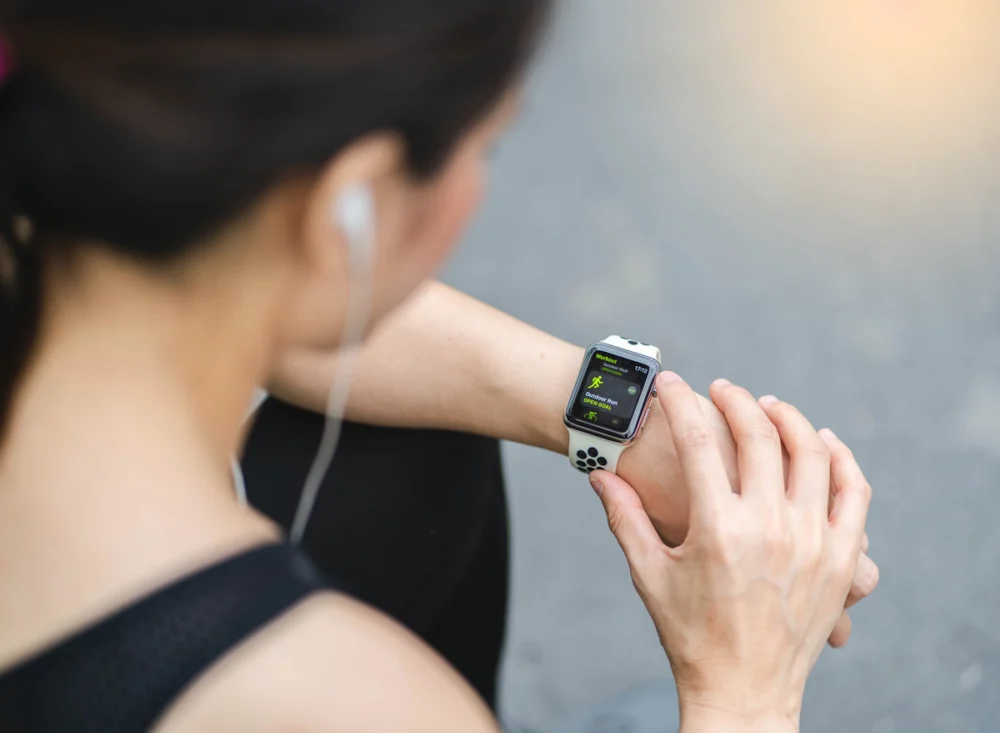
To undertake this assessment, all that is required is a clear wall space, a comfortable surface like a mat or carpeted floor, and a timer. Each of the three exercises is held for a continuous 30 seconds, followed by an exact 30-second rest period before transitioning to the next movement. This cycle is then repeated for a second round, with a one-minute rest interval separating the two full sequences. The paramount emphasis throughout the test is on maintaining proper form and controlled breathing. Should technique begin to falter, it is advisable to cease the hold, rest, and make a mental note of where the breakdown occurred, as this pinpointing of fatigue provides crucial diagnostic information.
Let’s delve deeper into each component of this functional fitness evaluation:
1. The Wall Sit
The wall sit is an excellent measure of lower body strength endurance, particularly targeting the quadriceps, glutes, and hamstrings, while simultaneously engaging the core muscles to maintain an upright posture. This exercise directly translates to real-world scenarios such as prolonged standing, walking up stairs, and the ease with which one can transition from a seated to a standing position. Strong performance here indicates robust leg support and reduced strain on knee joints during daily activities.
- Execution: Begin by standing with your back flat against a wall, feet shoulder-width apart, and approximately two feet away from the wall. Slowly slide down the wall until your hips are at knee height, forming a 90-degree angle at both your hips and knees, as if sitting in an imaginary chair. Ensure your thighs are parallel to the floor and your shins are perpendicular. Press your lower back firmly into the wall, engage your abdominal muscles, and keep your gaze straight ahead. Maintain steady, controlled breathing throughout the 30-second hold.
- Functional Relevance: This static squat position builds the muscular stamina required for sustained periods of standing, walking, and executing controlled movements that involve knee flexion, such as getting in and out of a car or descending stairs.
- Common Faults: Allowing the back to arch away from the wall, knees collapsing inward, or shifting weight excessively onto the heels or toes.
- Modifications: For those finding the full 90-degree angle challenging, start with a shallower squat (e.g., 45 degrees) and gradually increase depth as strength improves.
2. The Plank Hold
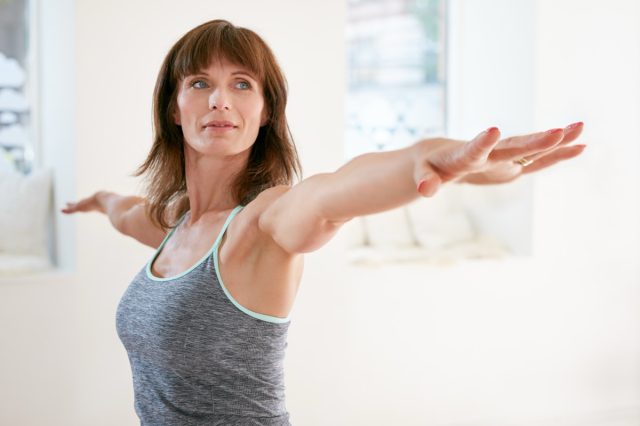
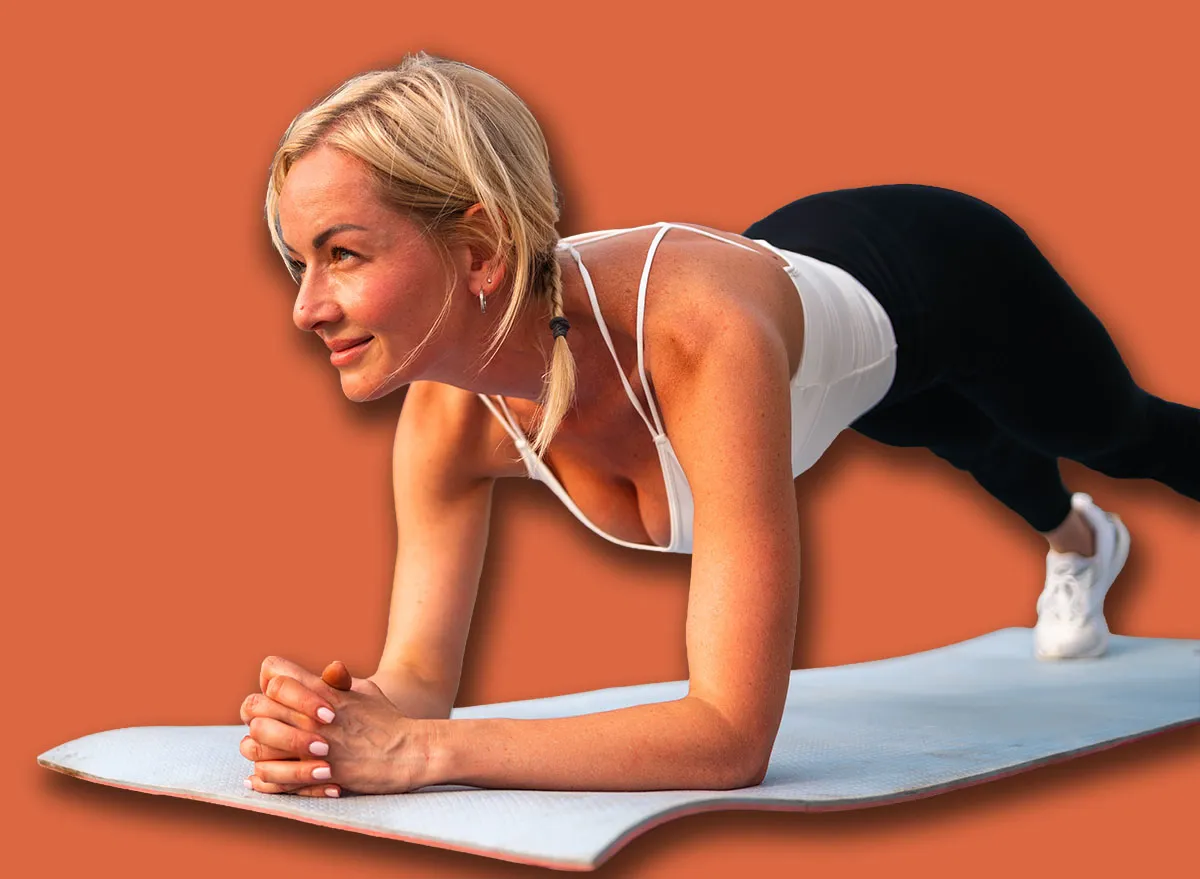
The plank is a cornerstone exercise for assessing and building core stability, challenging the entire anterior and posterior kinetic chain from the shoulders to the hips. It requires sustained isometric contraction of the abdominal muscles, lower back extensors, and glutes to maintain a neutral spine, reflecting how the core functions as a protective girdle for the vertebral column throughout daily activities. A proficient plank indicates the trunk’s capacity to resist fatigue, support posture, and safeguard the spine during movements like lifting, reaching, and maintaining balance.
- Execution: Begin in a push-up position, then lower onto your forearms, ensuring your elbows are directly beneath your shoulders and your forearms are parallel. Your body should form a straight line from the crown of your head through your shoulders, hips, and heels. Engage your core by drawing your belly button towards your spine, and squeeze your glutes to prevent your hips from sagging or arching excessively. Keep your neck in a neutral position, looking down at the floor. Breathe deeply and consistently for the duration of the 30-second hold.
- Functional Relevance: A strong, stable core is fundamental for virtually all physical actions, from bending to tie shoelaces to reaching for an overhead item, significantly reducing the risk of lower back pain and improving overall balance.
- Common Faults: Allowing the hips to sag towards the floor, lifting the hips too high (creating a "mountain" shape), rounding the upper back, or straining the neck.
- Modifications: If a full plank is too difficult, drop to your knees (knee plank) or perform the plank with your hands elevated on a sturdy surface (e.g., a counter or bench) to reduce the leverage.
3. The Glute Bridge Hold
The glute bridge hold specifically targets the gluteus maximus and hamstrings, crucial muscles for hip extension and pelvic stability. Strong glutes are vital for efficient walking mechanics, propulsion during movement, reducing strain on the lower back and knees, and enhancing overall balance. Holding the top position of this exercise ensures that the hips remain actively engaged, preventing reliance on momentum or compensatory movements from other muscle groups. It often uncovers imbalances or weaknesses in the posterior chain that might manifest during prolonged standing or walking.
- Execution: Lie on your back on the mat with your knees bent and feet flat on the floor, hip-width apart, positioned close enough to your glutes so you can just touch your heels with your fingertips. Keep your arms relaxed at your sides. Engage your glutes and press through your heels to lift your hips off the floor until your body forms a straight line from your shoulders to your knees. Ensure your core is engaged to prevent your lower back from arching excessively. Squeeze your glutes firmly at the peak of the movement. Hold this elevated position for 30 seconds, maintaining steady breathing.
- Functional Relevance: Powerful glutes are essential for propulsion, climbing, maintaining upright posture, and stabilizing the pelvis, which directly impacts gait efficiency and reduces stress on the lumbar spine and knee joints.
- Common Faults: Not lifting the hips high enough, arching the lower back instead of engaging the glutes, allowing the knees to splay outward, or failing to maintain a strong contraction at the top.
- Modifications: For an increased challenge, perform a single-leg glute bridge, holding one leg extended while lifting the hips with the other. To reduce difficulty, focus on the controlled movement up and down without the static hold initially, gradually introducing the hold as strength improves.
Interpreting Your Performance and Strategies for Improvement
Successfully navigating this seven-minute assessment with sustained good form indicates commendable strength endurance, core stability, and body control, qualities that significantly contribute to continued independence and vitality in later years. If you find certain positions challenging or experience a breakdown in form, this test serves as a valuable diagnostic tool, highlighting specific areas that may benefit from targeted training. It is not a judgment but an opportunity for growth.
To enhance performance in this test and, by extension, improve overall functional fitness, several strategies are highly effective:
- Consistent Practice: Regular engagement with these foundational exercises, even for short durations, builds muscular memory and endurance. Aim for consistency over sporadic, intense efforts.
- Prioritize Form: Always emphasize correct technique over the duration of a hold or the number of repetitions. Incorrect form not only reduces effectiveness but also increases injury risk. Consider practicing in front of a mirror or recording yourself to refine your movements.
- Gradual Progression: As strength improves, gradually increase the duration of your holds, or explore more challenging variations of each exercise (e.g., single-leg wall sit, elevated plank). This principle of progressive overload is key to continuous improvement.
- Integrate Holistic Wellness: Physical performance is deeply intertwined with overall well-being. Ensure adequate hydration, a balanced diet rich in protein for muscle maintenance, sufficient sleep for recovery, and stress management.
- Listen to Your Body: Pay attention to signals of fatigue or discomfort. Overtraining can be counterproductive, leading to injury or burnout. Incorporate rest days and dynamic stretching or mobility work into your routine.
- Seek Professional Guidance: If you have pre-existing health conditions, chronic pain, or significant difficulty with the exercises, consulting a physical therapist or a certified personal trainer specializing in older adult fitness can provide tailored guidance and ensure safety. They can help adapt exercises to your specific needs and develop a comprehensive fitness plan.
In conclusion, maintaining a high level of functional fitness is a cornerstone of healthy aging, enabling individuals to enjoy an active, autonomous, and fulfilling life. This concise, bodyweight-based assessment offers a practical and insightful benchmark for evaluating essential physical capacities. By understanding one’s current capabilities and committing to consistent, mindful practice, older adults can actively invest in their physical resilience, ensuring their bodies remain strong, stable, and responsive to the demands of everyday living for many years to come. The ability to complete this test effectively signifies a profound commitment to one’s long-term health and independence, embodying peak functional shape regardless of chronological age.
About the Author